R. Menachem Genack, in The Forward, on the move towards glatt kosher (link).
 2:04 PM
 Gil Student
9:36 AM
Gil Student
Gil Student
9:36 AM
Gil Student
Jews regard the State of Israel highly for a number of reasons. Citizens of Israel may have a patriotic feeling toward it; Jews worldwide may see it as a physical haven and home base. Religious Jews worldwide may see Israel as all that, plus a spiritual home, a gift from God and, hopefully, the stage of the redemption.
None of these reasons touch the government of the State, as terrible as some of its ideas or actions may be. I don't think, for example, that when Bill Clinton became president in 1992, conservative or Republican commentators in the United Stated agonized over whether they would have to stop being patriotic, or loving their country or serving in the armed forces.
As human beings with minds of our own, we will never completely agree with whoever it is who is governing us... But giving up on the whole enterprise when that happens is inexplicable.
10:52 PM
Gil Student
10:47 PM
Gil Student
 12:21 PM
Gil Student
12:21 PM
Gil Student
11:58 AM
Gil Student
10:19 PM
Gil Student
10:17 PM
Gil Student
Dear Gil,Buy the book
I'm a Conservative Jew, who has recently started attending an Orthodox congregation. I am receptive to the Orthodox view of the world when it comes to matters of faith and practice, but find rigid, intolerant, literalism, particularly with respect to matters of science, a total "turn off." I could not dedicate myself to a Torah that requires blinding ourselves to empirically established facts.
I read the reference to Rabbi Slifkin's book in the Weekly Standard and was intrigued. (I read a book with a similar premise, that I recall as being "The Science of G-d" a decade ago or so, by somebody I recall as Gerald Schroeder...do you recall that book?)
This view opens a door to faith that would be closed to people like me if the rabbis who would ban this point of view were to prevail. This was a point you made in the article on your web-site in support Rabbi Slifkin.
Thanks for standing up for a Torah perspective open to scientific inquiry and facts. Well worth the extra $5.00 for shipping!
David
1:06 PM
Gil Student
6:05 AM
Gil Student
On Thursday, May 21st, 1992, Lisa Schiffren, then a member of my synagogue, called to ask what I thought of this already famous speech... "If it's okay with you, I will fax it to you?... Take a look at the paragraphs I have highlighted..."
[T]hree paragraphs were marked -- three paragraphs that paraphrased, quite closely, three paragraphs from the May 9th sermon on values I had given.
I called Lisa at her office where she worked as Vice President Dan Quayle's chief speechwriter and asked her what this all meant. She told me that the vice-president, for several weeks, had been discussing with his staff the idea of taking a strong public stand on an ethical issue that he cared about. After hearing my sermon in shul on Parshat Kedoshim, she had come forward with the suggestion that he might want to advocate something that would be called "family values". The rest, as they say, is history.
(R. Barry Freundel, Contemporary Orthodox Judaism's Response to Modernity pp. viii-ix)
11:37 AM
Gil Student
10:12 PM
Gil Student
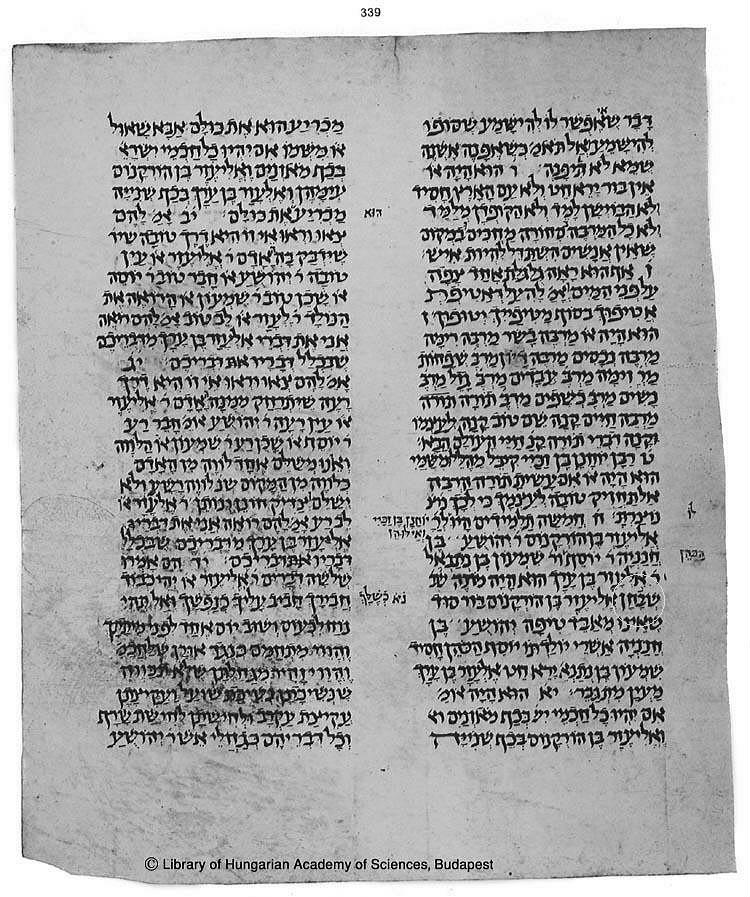
Those who say "u-shevach'kha" have strayed from the path of intelligence. Rather, it is ve-shivchakhah...This seems to imply that it was not uncommon in his time for people to pronounce it u-shevach'kha, although most people pronounced it ve-shivchakhah. If it were otherwise, his objection would certainly have been worded differently.
The word "shevach/sh'vach" does not appear in Scripture, either independently or connected [to another word], and we have no tradition on its proper pronunciation. Its existence is only in the language of the Talmud and the prayers. When we have no certain way to determine the correct pronunciation of such words, we must listen to the pronunciation of the people who use [these words]. We hear that anyone involved in the Talmud in all countries of the dispersion -- from Ashkenazim and Sephardim to those in the east and west, and Yemenites -- all say "One should always prepare sh'vacho of God and afterwards pray" (Berakhos 116a), "It is forbidden to recite bi-shvachan (Sotah 42b)... Since the long vowel is pronounced quickly, it sounds like a short vowel [i.e. a pasach rather than a kamatz]... But we never heard anyone in any of these places say "shevach", "shivcho", or "shivchan"... Therefore I say that the pronunciation of the Vilna Gaon is correct and should be accepted...[UPDATED:] It seems to me that the testimony of the Kaufman manuscript indicates that both pronunciations are legitimate. (click on this image to enlarge it)
 5:51 AM
Gil Student
5:51 AM
Gil Student
6:08 AM
Gil Student
6:06 AM
Gil Student
10:58 AM
Gil Student
Halachic Woman
While Kehillat Orach Eliezer (KOE) on the Upper West Side is an independent entity, its halachic decisor, Rabbi David Halivni, was also, until his move to Israel, the spiritual head of the Union for Traditional Judaism. (“Woman To Lead Halachic New York Shul,” Aug. 18)
Click here to read moreYour article states erroneously that Rabbi Halivni left the Jewish Theological Seminary more than 25 years ago over “the Conservative Movement’s decision to ordain women.” While that statement is part of the common wisdom today, if it were truly that simple it would make KOE’s decision shockingly dissonant with Rav Halivni’s approach. Since he was asked about this by KOE prior to his departure for Israel and he approved their potential choice of a halachic woman as congregational leader, either he has changed his mind over the years, or The Jewish Week had it wrong, as have others for more than two decades. The latter is the truth.
Rav Halivni did not leave JTS over women’s ordination. He and other UTJ founders’ concern was that, given the way the issue was being handled in the Conservative movement, with lack of both process and substance, it would lead to more wide-ranging breaches of halacha having nothing to do with gender issues.
In the case of KOE, Rav Halivni and the UTJ can comfortably support their decision. They are doing it right. They have brought on board a woman who does not claim to be a rabbi, although her work as teacher and preacher is rabbinic.
If a qualified woman becomes the leader of the community without breaching halacha and if her goal is to teach Torah rather than simply further the role of women (i.e. a political agenda), it is, in our opinion, a real kiddush HaShem (sanctification of God’s name).
Rabbi Ronald D. Price
Executive Vice President Union for Traditional Judaism
Teaneck, N.J.
10:53 PM
Gil Student
 5:32 PM
Gil Student
5:32 PM
Gil Student
10:29 AM
Gil Student
Rabbi Natan Slifkin, a.k.a. the Zoo Rabbi, will be lecturing at Stern College for Women on Aug. 28 at 6:30 pm in the Levy Commons, 215 Lexington Ave. The lecture is open to the public and is sponsored by the Biology Department at Stern College for Women.ALSO:
Rabbi Slifkin will be talking about "The Heresy of Intelligent Design.” He is a lecturer at yeshivot and seminaries in Israel, the author of numerous books on Torah and the natural world, and has taught “Zoo Torah” to thousands of people worldwide.
6:38 AM
Gil Student

QUESTION: I heard that there is a written manual in the Jewish holy books which lists remedies to various illnesses; an ancient guide to remedies; my husband is currently on the waiting list for a liver transplant; pursuing a transfusion he contracted years ago hepatitis C(emphasis added)
ANSWER: There are some medical remedies mentioned in the Talmud, as well as other, later works (such as the Rambam’s book on medicine - he was also a doctor). However, these are not special, secret remedies. The Torah tells us “v’rapoh y’rapeh”, “and He shall certainly heal (Shmot 21:19)”. The Talmud learns from here that it is proper and required to seek medical help to deal with illness (Bava Kama 85a).
The remedies mentioned in ancient sources are based on the best medical information available to them at their time. Where modern medicine agrees, wonderful. When not, one should follow present-day experts. I hope and assume that your husband is receiving the best medical attention available to you.
We, of course, do not rely on medical help, alone. We are instructed to turn to Hashem for help, for He is the true Healer. However, we do this with different types of remedies. We rededicate ourselves to the proper service of Hashem, which is our purpose for being put in this world. We have a blessing in each Shmoneh Esrei prayer for health, in general. It is appropriate to insert there our requests regarding any specific people who need a refuah. We can say Tehillim on behalf of the ill. We can go to holy places to pray and ask holy people to join us in prayer.
Will all of these things heal? Maybe yes, maybe no. But the good deeds will all be remembered above and will manifest themselves in ways we may never know. The ancient “remedies” of prayers and good deeds, along with best in modern medicine, are the best we can do.
Our best wishes for your husband’s full and speedy recovery. If you would like to send us his name (Jewish name and mother's Jewish name), we will, G-d willing, include him in the list of the ill for whom we pray.
9:42 PM
Gil Student
The boundary line between faith and intellect is also the distinguishing line between two camps of views among the great Jewish thinkers. Is there a place for human intellect in questions about the source and purpose of the world? And is there an obligation in relation to these isses place upon the intellect? These are the questions, and the answers are conflicting.
The Intellectual Camp, whose main representatives are R. Sa'adia Gaon, Rabbenu Bachya and Rambam, answer: yes. "Know the God of your fathers and worship Him" -- the command of the Torah is to base the foundations of belief in intellectual proofs. However, even according to these views, there remains a tradition and an inherited quality of faith. The Rambam warns that, because of intellectual limitations and emotions, there will remain doubts... The conclusion to which we strive through intellect is known, and we are confident from the beginning of its correctness...
The contrary approach is described aptly by R. Yosef Albo (Ikkarim) and its foundations were already laid in the Kuzari. Its essence is: "Faith is above intellectual apprehension." The human intellect clings to the Divine spirit specificall through faith (R. Yosef Albo; compare with Kuzari 1:4, 13; 4:16-18). These views prefer in this issue feelings of faith and family traditions over intellectual considerations... However, even though these views do not prefer the intellect, only do so because they consider this field beyond the boundaries of the human intellect. But they still do not believe that it is possible to be obligated to believe something that contradicts the intellect: "God forbid that something in the Torah should contradict a proof or demonstration" (Kuzari 1:67)...
It is not up to us to decide between this debate among greats, and we will not come to rule on issues of belief on matters of eternal importance. We will suffice with just pointing to the lines of thought of different approaches, from which emerge great differences in each approach to Jewish thought.
9:36 AM
Gil Student
 6:02 AM
Gil Student
6:02 AM
Gil Student
 9:36 PM
Gil Student
9:36 PM
Gil Student

We have already seen how Israel of Shklov [author of the classic Pe'as Ha-Shulchan] argued, in one of his main epistles, that the Three Oaths do not bind the Jews unconditionally, but depend, rather, on the other nations' attitude toward them... When the nations break their side of the bargain and persecute the Jews intolerably -- as by the Russian army draft -- they thereby annul the Jews' obligations as well...However, when 1840 came and the messiah did not appear (and then also in 1846), and not only that but conditions worsened quickly and dramatically, there was widespread disappointment, with some (very few) even converting to Christianity in the face of heavy missionizing. (The decade following 1840 saw frantic printing of countermissionary tracts, such as Troki's Chizzuk Emunah.) After this, the leadership generally abandoned their messianic approach and focused more on communal and individual survival. Indeed, such messianic theologies lost favor and became criticized when they were later brought up.
Aviezer of Ticktin offers a different account of how the prohibition in the Three Oaths came to be annulled. In his view, the ban on pressing for the end, as referred to in the Talmud, remains in force as long as -- but only as long as -- times remain normal. Once the "time of divine visitation" (`et peqidah) arrives, as it now has, advancing the redemptive process by pressing for the End becomes not only permitted but even obligatory...
The Vilna Ga'on interpreted the oath's prohibition to apply not to aliyah to the Land of Israel or even to pressing for the End, but only to rebuilding the Holy Temple...
11:13 PM
Gil Student
2:24 PM
Gil Student
So during the "ceremony" he gave Johnny Damon a bracha for a good game. Through the 6th inning the Yankees were doing miserably with no runs and very few base hits. Even with one run in the 6th or 7th they were loosing 3 to 1. Then Johnny Damon got up to bat in the bottom of the 7th and hit a 2 run homer! Tied the game! The next time he got up he hit a triple, sending a team-mate home and placing himself on third. Then with the next batter Johnny Damon ran home again. The Orioles never scored again and the Yankees won!Not only that, but on Wednesday and Thursday the Yankees lost!
8:58 AM
Gil Student


 6:25 AM
Gil Student
6:25 AM
Gil Student
Every rabbinic prohibition they permitted for the sake of a mitzvah is also permitted for the sake of guests. They are not called guests unless they are staying with him in his house or he invited someone staying with others. But if he just invites a friend to eat with him they are not called guests and this is not a se'udas mitzvah (mitzvah meal) but a se'udas reshus (regular meal).In other words, inviting your friend down the block over for a meal is not called Hakhnasas Orechim.
1:20 PM
Gil Student
6:14 AM
Gil Student
18 Moses went back to his father-in-law Jethro and said to him, "Please let me go back to my kindred in Egypt and see whether they are still living." And Jethro said to Moses, "Go in peace." 19 The Lord said to Moses in Midian, "Go back to Egypt; for all those who were seeking your life are dead." 20 So Moses took his wife and his sons, put them on a donkey, and went back to the land of Egypt; and Moses carried the staff of God in his hand. 21 And the Lord said to Moses, "When you go back to Egypt, see that you perform before Pharaoh all the wonders that I have put in your power; but I will harden his heart, so that he will not let the people go. 22 Then you shall say to Pharaoh, "Thus says the Lord: Israel is my firstborn son. 23 I said to you, "Let my son go that he may worship me." But you refused to let him go; now I will kill your firstborn son.' "In verse 18, Moshe tells his father-in-law that he will be returning to Egypt to see whether his brothers are in Egypt. But what about the mission with which God had just charged him? Why did he omit that? Then in verse 19, God orders Moshe to go to Egypt. Shouldn't that have preceded Moshe's telling his father-in-law that he was going? Additionally, the reason in verse 19 -- that those trying to harm Moshe had died -- seems strange. If Moshe had a Divine mission, that would not have been a consideration. Then verse 20 tells us that Moshe took his family and left, and then went back to take the staff of God. Shouldn't he have taken the staff before he first left? Then in verses 21-23, God advises Moshe about how to go about his mission. Shouldn't this have taken place before Moshe left?
[O]ne can well imagine that the experience of his prophecy had its effect and continued to trouble Moses to the point that he came to his father-in-law and announced that he was going to make a journey to Egypt to visit his brothers and to inquire about their welfare. As a matter of fact, when he takes leave of Jethro, this is all he intends to do and this is all the text indicates. It is at this point that G-d appears to Moses and tells him that it is proper for him not merely to visit Egypt, but to return to Egypt and to live with his brothers again...
At first, when his intention was merely to visit Egypt, his plan was to make the journey alone. Now that he is going to live there, his entire plan changes: he takes his wife and children. But -- and this is the point -- almost as an afterthought, he also takes the 'rod of G-d' with him -- the rod which will serve as a symbol of leadership, as a sign of the Divine mission and as an instrument of miracles. This is really the first indication that Moses is still considering the possibility of accepting the mission of G-d, and of becoming the redeemer of Israel.
Verse follows verse so beautifully. It is at this very juncture that Moses decides to take the "rod" with him, though his acceptance of the mission is so far from definite, that G-d again appears to him and again outlines the major features of the mission. Noting that Moses is still vacillating, still undecided, but nevertheless taking the "rod of G-d" with him, G-d spells out the mission in its dramatic form -- and urges Moses to accept it and to pursue it to its triumphant conclusion.
10:40 AM
Gil Student

The Slifkin Torah-Science Controversy
An admittedly biased insider's perspective
The Jewish community is no stranger to conflict. Some controversies, however, transcend their local concern and reverberate in ways originally unintended. I believe we have witnessed such an event with the recent controversy surrounding three books about Torah and science by Rabbi Natan (Nosson) Slifkin. The bans promulgated on his books have come to represent more than just disapproval of those specific works; they have come to signify the lack of centralized rabbinic authority in our globalized world and the increased empowerment of the individual afforded by the Internet.
The Books
Let me start from the beginning. Rabbi Slifkin has been teaching about Torah and animals for a number of years and has written prolifically on these subjects. These issues led him to topics regarding Torah and science in general, and after careful research he published three books about the subject.
His first book in this genre was titled The Science of Torah and discussed the age of the universe and evolution. His next was Mysterious Creatures and addressed the seemingly mythical creatures mentioned in rabbinic literature, such as unicorns and dragons, and the general scientific orientation of the Sages. And the last was The Camel, the Hare, & the Hyrax, which discussed the kosher signs of animals and their relation to current zoological knowledge.
All three books had haskamos (approbations) from English-speaking Torah authorities and were initially well received.
Personally, I became acquainted with Rabbi Slifkin through e-mail and bought The Science of Torah, but was not particularly interested by it. Various theories of reconciling Torah, the age of the universe and evolution were old hat to me. I had already heard and read enough on the subject in my youth to recognize that there is no contradiction between various common scientific theories and the Torah.
I was not even going to buy the second book, Mysterious Creatures, until a number of people told me my name was mentioned in the introduction. It seems some personal exchanges with Rabbi Slifkin were valuable enough to him that he thanked me for my contribution. I did buy that book and greatly enjoyed it. I then rushed to acquire the third book when it became available and was likewise impressed with it. I even wrote a review of it for my blog (TorahMusings.com) and translated into English its laudatory approbation from a respected posek.
The Ban
You can imagine my surprise when I discovered, between Rosh Hashanah and Yom Kippur two years ago, that Rabbi Slifkin's books had been condemned as heretical. I don't recall how the grapevine carried the news to me, but looking back I see that I still have my e-mail to him inquiring about it and now realize that I contacted him on the very day that everything started. What follows is based on Rabbi Slifkin's retelling of the story and my own recollection of the events of which I was aware.
Rabbi Slifkin received a phone call on September 21, 2004, informing him that he would shortly be receiving faxes of letters from rabbis stating that he must retract the three books mentioned above. He would have until the end of that day to do so or face public scandal and humiliation.
Rabbi Slifkin immediately tried to arrange meetings with the rabbis whose letters were faxed to him but they all refused to meet with him (one initially agreed but later changed his mind). Rabbi Slifkin also called the rabbis who had written haskamos for his books to see if they had retracted those approbations, as those condemning his books had claimed. This turned out to be false.
On the advice of his halachic authority, Rabbi Slifkin refused to recant his books until he would be able to meet with the rabbis condemning the books. As he wrote to me in his private e-mail late that night, "If they'll show me where I wrote something wrong, of course I'll change it, my website is full of corrections to my books." But he never had that opportunity.
On September 23, a major rosh yeshiva in America phoned Rabbi Slifkin to offer him encouragement and tell him to keep a low profile and let the whole thing blow over. But it did not subside. The next day, erev Yom Kippur, signs went up in Rabbi Slifkin's neighborhood declaring that the books are full of heresy and that one is forbidden to own them. The following months saw signs posted in Israel and pamphlets distributed in Israel and the U.S. vilifying Rabbi Slifkin.
In the week of January 2, 2005, the Israeli (Hebrew) Yated Ne'eman published a ban against Rabbi Slifkin's books signed by some leading rabbis in Israel and in America, including Rav Yosef Shalom Eliashiv, Rav Chaim Pinchas Scheinberg and Rav Dovid Feinstein, along with an accompanying article. The next week, the European (English) Yated Ne'eman published a translation.
That is where my direct involvement began. After the publication of the ban, Rabbi Slifkin's publisher and distributor decided to cease their involvement with his books. After consultation with a number of rabbis who wanted these books available for their communities, my new publishing house, Yashar Books, agreed to take on the distribution of the books.
As the arrangements were being made and afterward, I obtained support from a number of leading rabbis and roshei yeshiva. My position continues to be that a community whose rabbi rules the books are permissible should have access to them.
Subsequent Developments
Since the original publication of the ban, more rabbis have published letters against Rabbi Slifkin, some denouncing science in eneral while others addressing only the books in question. Due to the immediacy of the Internet, any letter or article condemning Rabbi Slifkin has been quickly disseminated.
In the meantime, Rabbi Slifkin did not simply stand back and allow his books to be denounced. After the ban appeared on Yated Ne'eman's website, Rabbi Slifkin added a section to his website (ZooTorah.com) to address the controversy. In this section, he calmly and responsibly presented an account of the events, relevant documents, and responses supporting him by various rabbis. He also posted a long list of sources that seem to directly contradict claims that his positions are unacceptable.
In addition to all this, the entire controversy was being carefully covered on various Internet media, most notably blogs. I posted frequently to my blog on this subject. While I tried to restrict my comments to respectful discussion of intellectual subjects, other blogs reflected less discipline, sometimes going well beyond the bounds of decency.
There was a sense of outrage over this ban and, more than that, personal pain. Whether from baalei teshuvah who felt pushed out of the community for which they had sacrificed so much to join, or rabbeim and kiruv workers who had just been informed that they'd been teaching heresy for many years, there was a very loud cry of anguish being voiced on the Internet. It was this new medium that served as the focal point of criticism of the ban and, ironically, the growing crisis of faith it has caused.
Of the three banned books, The Science of Torah had already sold out before the ban, and the other two sold out fairly quickly in the ban's immediate aftermath. The Science of Torah was recently thoroughly revised, expanded and published under a new title, The Challenge of Creation, with a foreword by Rabbi Tzvi Hersh Weinreb of the Orthodox Union. Because of the controversy, we have had the book reviewed by a number of knowledgeable rabbis, including an expert on both Torah and science from whom my posek insisted we receive permission before commencing with publication.
It was no surprise to me that a tremendous wave of support for Rabbi Slifkin was forthcoming from the Yeshiva University orbit. Rabbis, professors, students and alumni sent many supportive e-mails, looking for ways to help. The largest Jewish book sale in the country, Yeshiva's SOY Seforim Sale, stocked the banned books, all of which sold out very quickly.
(To the organizers' credit, they were hesitant to stock the books until I had them speak to Yeshiva's mashgiach, who insisted that they sell them. There have since been a number of lectures on this topic, some by roshei yeshiva and rabbeim and others by professors, all generally favoring Rabbi Slifkin's positions, even if criticizing him on minor points.)
But what surprised me most was the support from the yeshivishe world. I was expecting very little but received, and continue to receive, many letters, e-mails, phone calls, and even random stops on the street in Brooklyn from people who feel very passionately about this subject. Many rabbis and learned laymen seem to have tremendous sympathy for Rabbi Slifkin, both on a personal level for his public humiliation and on an intellectual level for his championing their views.
The Issues
From the beginning it has never been quite clear what the problems are with the banned books because none of the rabbis involved gave any detailed explanation.
The initial ban quotes Rav Yisroel Weintraub as saying vaguely tht Rabbi Slifkin denigrated our tradition. Rabbi Yitzchak Sheiner is quoted as saying the problem is that Rabbi Slifkin believes that the world is millions of years old. And Rav Elya Ber Wachtfogel is quoted as saying the problem is that Rabbi Slifkin claims that the Sages could, on rare occasions, err in scientific matters and any corresponding halachic issues. Rav Moshe Shapiro was unclear but seemed to object specifically to the issue of the Sages and science.
None of them, however, agreed to clarify the matter by meeting with Rabbi Slifkin and explaining their objections. Months after the ban, Rav Aharon Feldman cited as problematic Rabbi Slifkin's approaches to the age of the universe, the order of Creation, evolution and the Sages' knowledge of science.
In Rabbi Slifkin's books, he described the evidence for an ancient universe and discussed the various theories that have been proposed to explain this from a Torah perspective. He then offered his own theory, which follows in the footsteps of the Rambam, Rav Dovid Tzvi Hoffmann, Rav Aryeh Kaplan and others, and which takes the "six days" of Creation in a less than literal sense. This, the banners seem to claim, is heretical, while others either support this view or find it hard to condemn considering its respected pedigree.
Following the view of Rav Samson Raphael Hirsch and Rav Avraham Kook that if evolution can be demonstrated to be true it is consistent with the Torah, Rabbi Slifkin reviewed the evidence for evolution (as he defines it) and proposed a Torah perspective for understanding it. While it is understandable that people might disagree with his conclusion, the approach in general is not Rabbi Slifkin's but of those much greater than he. The strong Torah precedents for his views are even clearer in his new book, The Challenge of Creation.
Regarding the Sages and science, Rabbi Slifkin surveyed the many views on how to deal with the apparent discrepancy between current scientific knowledge and various Talmudic statements. He made it clear that he favored the view of the Rambam (most eloquently stated by Rambam's son), the Gaonim, and many authorities throughout the centuries and up to this day that the Sages sometimes relied on the scientific conclusions of their contemporary experts.
The banners seem to have been particularly disturbed by this position despite its being advocated by such recent luminaries as the Maharam Schick, Rav Hirsch and Rav Yitzchak Herzog. One banner reportedly dismissed Rabbi Slifkin's precedents among Torah authorities by saying, "They were permitted to hold this opinion; we are not." My rosh yeshiva has told me he strongly disagrees with this statement.
I am certain that some readers will be scandalized by Rabbi Slifkin's approach to these topics and others will wonder what the big deal is. I was among the latter, having heard for many years that Judaism has no problem with such ideas. It is not just the Modern Orthodox world in which these ideas have gained acceptance. The utter shock with which many within the American yeshivishe community reacted to this ban, the stunned expressions of the kiruv professionals, shul rabbis and high school rabbeim when they learned that the approaches they had been taught and were teaching are unacceptable, is testimony to how mainstream these ideas had become. Rav Aryeh Kaplan's writings certainly reach beyond Modern Orthodoxy.
To this day, I still have trouble understanding the intent of the ban. Were the Torah scholars who signed the ban really ruling that these views are heresy, other sages notwithstanding? Or were they just trying to protect the students in their yeshivas and members of their communities from views they consider dangerous but not heretical?
Rav Chaim Soloveitchik described mussar as a harsh medicine that cures those who are sick but makes ill those who are healthy. The banners may be concerned that the traditional views cited in Rabbi Slifkin's books are similar in that they might damage the faith of some readers. But even if true, dispositions and backgrounds vary and these views are essential for the faith of many others. It would therefore seem that this should be a local matter, depending very much on individuals and communities, and addressed by local rabbis and roshei yeshiva, rather than impersonal halachic rulings on posters and in newspapers.
The ban, as it stands, raises many difficult questions for a large segment of the Orthodox community. Ironically, the ban - both in terms of procedures and content - has generated questions of faith that are perhaps greater than those it was supposed to prevent.
We can only hope that in the future the concerns of the greater community will be specifically addressed - along with an explanation of how such a devastating personal blow can be issued without the accused being allowed to defend himself. That's certainly preferable to a proclamation issued from afar that leaves the public guessing about the rest of the story.
10:25 PM
Gil Student
12:08 PM
Gil Student
Beginning next week -- at the
Seymour J. Abrams Orthodox Union Jerusalem World Center
(the “Israel Center”),
22 Keren HaYesod Street, Jerusalem,
Wednesday evenings (opening session on 29 Av / 23 August), 7:30-8:30,
NEVER BEFORE PRESENTED TO THE PUBLIC...
AN EXCITING, UNIQUE, NEW SERIES FOR THINKING PEOPLE!
It will challenge your Judaism; it will change your life....
“Truth Will Sprout from the Earth”:
How Many Truths?
How Many Legitimate Pathways to G-d?
(Is ‘Pluralism’ a Dirty Word?)
Forays of the Mind and Spirit
Compiled by Chaim Eisen
7:04 AM
Gil Student
True, he did not, in the long run, hold aloft the banner of the ideology that is now termed "Da'at Torah," which maintains that every political question has an essentially halakhic character, and is thus susceptible to the obligatory and exclusive decisions of the gedolei Torah. At first he inclined to this view, and even asserted it with enthusiasm. As he said, in his eulogy for R. Hayim Ozer ז"ל...Also of relevance is the following passage from R. Hershel Schachter's recent article (p. 4):
After a time, he abandoned this view, and in the course of decades he accepted and even sharpened the distinction between matters involving mizvot (divrei mitzvah), which are to be decided by halakhic decision-makers, and other matters (divrei reshut), in which significant weight is attached to the opinions and authority of other leaders, or to private judgment. Nevertheless, although he rejected the decisive reach of rabbinic authority in political matters, he was insistent that such matters be determined from a perspective of refined spirituality and in consonance with Torah values. And he fully recognized that he was one of the few who could bring the proper measure of spirituality to bear upon Religious Zionism so as to ensure its standing as a Torah movement.
We also heard similarly regarding political matters, that many times R. Chaim [Soloveitchik] reached a decision and did not allow other rabbis to vote and disagree with him. This is in accord with the aforementioned view of the Vilna Gaon, that these Torah giants believed that they had succeeded in achieving an absolute conclusion from which there is no room to deviate right or left. However, our teacher [R. Joseph B. Soloveitchik] frequently said -- many times -- that he does not say "Accept my view." He would say this regarding both halakhic and political matters.
I heard from R. Norman Lamm that our teacher was once asked about a political matter, and the rabbi responded to the questioner on the issue. The questioner then asked, "Is our teacher's 'Da'as Torah' such-and-such?" Our teacher immediately responded, "I did not say 'Da'as Torah.' I only said my opinion and the listener will choose." It seems to me that his words mean as follows: People tend to use the phrase "Da'as Torah" as meaning an absolute conclusion from which the listener has no permission to discuss or disagree. This was not the approach of our teacher, as is famous and known to all.
4:22 PM
Gil Student
6:03 AM
Gil Student
10:35 PM
Gil Student
Hear, O Israel! You are about to cross the Jordan today, to go in and dispossess nations larger and mightier than you, great cities, fortified to the heavens, a strong and tall people, the offspring of the Anakim, whom you know. You have heard it said of them, "Who can stand up to the Anakim?" Know then today that the Lord your God is the one who crosses over before you as a devouring fire; he will defeat them and subdue them before you, so that you may dispossess and destroy them quickly, as the Lord has promised you. When the Lord your God thrusts them out before you, do not say to yourself, "It is because of my righteousness that the Lord has brought me in to occupy this land"; it is rather because of the wickedness of these nations that the Lord is dispossessing them before you. It is not because of your righteousness or the uprightness of your heart that you are going in to occupy their land; but because of the wickedness of these nations the Lord your God is dispossessing them before you, in order to fulfill the promise that the Lord made on oath to your ancestors, to Abraham, to Isaac, and to Jacob. Know, then, that the Lord your God is not giving you this good land to occupy because of your righteousness; for you are a stubborn people.Deut. 11:22-23:
If you will diligently observe this entire commandment that I am commanding you, loving the Lord your God, walking in all his ways, and holding fast to him, then the Lord will drive out all these nations before you, and you will dispossess nations larger and mightier than yourselves.Granted, these verses are talking about the initial conquest of the land. But the implication is that, if we are not entirely righteous, we will still the conquer the land but in a long, drawn-out process.
10:02 AM
Gil Student
7:34 AM
Gil Student
At the very dawn of creation, when Ha-Kadosh Barukh Hu consulted with the angels, as it were, as to whether or not He should create man, there was a disagreement in the heavenly court. The Midrah (Gen. Rabbah 8:5) says that the heavenly hosts were divided into different groups... [T]ruth was opposed, because, it said, man is basically a liar (she-kulo shekarim)... Peace was opposed because, it maintained, man is full of strife (dekhula ketatah). Truth and Peace were against the creation of man... Why were Truth and Peace opposed?
I once heard from my father zikhrono livrakhah, may his memory be for a blessing, that man can be either a perfect man of truth or a perfect man of peace, but he cannot be both at the same time. A man of truth does not know the secret of compromise...
In olam ha-zeh, this world, there is a conflict between truth and peace... But in the messianic era, the conflcit will be removed. This is what the verse means when it says "And love truth and peace." To be complete, man will not have to sacrifice either truth or peace, but will be able to act fully in accordance with both.
12:09 PM
Gil Student
11:02 PM
Gil Student
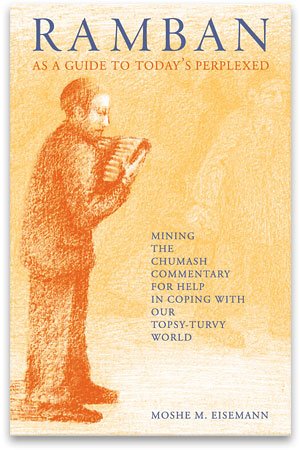
If Ramban accepts Targum's interpretation, it would simply mean that these people are occasionally left to the vagaries of nature. There will be times when what happens to them will be directly brought about through hashgachah either to reward or to punish. During the intervening times they are left to their own devices.Interestingly, R. Eisemann asks how we -- average Jews -- are supposed to deal with the idea that God's continuous providence only applies to the most righteous (see this post). He suggests that we take it as an inspiration and encouragement to better ourselves so that we become worthy of God's providence. Page 96:
If what Ramban taught us sounds to our guilty ears like a form of caste system, that is not what the Ribono shel Olam wants us to feel. He hopes that, knowing that we have not measured up to the degree of deveikus which would place us among the "ins," we will fight long and hard to regain entry into His embrace. The degree to which we remain on the outside depends entirely upon ourselves. The Ribono shel Olam is waiting.This is similar to R. Joseph B. Soloveitchik's response to a similar concern regarding the Rambam's approach to providence (Halakhic Man, p. 128):
The fundamental of providence is here transformed into a concrete commandment, an obligation incumbent upon man. Man is obliged to broaden the scope and strengthen the intensity of the individual providence that watches over him. Everything is dependent on him; it is all in his hands. When a person creates himself, ceases to be a mere species man, and becomes a man of God, then he has fulfilled that commandment which is implicit in the principle of providence.
9:58 AM
Gil Student
No true Scotsman is a term coined by Antony Flew in his 1975 book Thinking About Thinking. It refers to an argument which takes this form:The definition of a Torah giant is not someone who agrees with you or your teachers. I would posit that it is someone who is greatly accomplished in Torah learning and continues in the path of his mentors. There is, of course, much more that could be said in regard to defining this amorphous term. However, redefining the term after finding a Torah giant who disagrees with you is a logical fallacy, perhaps committed too often.Argument: "No Scotsman puts sugar on his porridge."This form of argument is a fallacy if the predicate ("putting sugar on porridge") is not actually contradictory for the accepted definition of the subject ("Scotsman"), or if the definition of the subject is silently adjusted after the fact to make the rebuttal work.
Reply: "But my uncle Angus likes sugar with his porridge."
Rebuttal: "Ah yes, but no true Scotsman puts sugar on his porridge."
11:10 PM
Gil Student
Before going any further, it must be mentioned that most of the more recent Kabbalistic texts do not make any reference to these teachings. This is because two of the greatest Kabbalists, Rabbi Moses Cordovero (the RaMaK) and Rabbi Isaac Luria (the Ari) disputed this concept in general...That is presumably why the Tiferes Yisrael and Rav Kook felt comfortable citing this position. In a very recent article in the Torah U-Mada Journal on this doctrine of Sabbatical years, Raphael Shuchat suggests (here - PDF, n. 99):
Here, however, the second principle that was discussed earlier comes into play. Since this is not a matter of law, there is no binding opinion. Although the Ari may have been the greatest of Kabbalists, his opinion on this matter is by no means absolutely binding. Since there were many important Kabbalists who upheld the concept of Sabbatical cycles, it is a valid, acceptable opinion.
Despite the fact the R. Kook follows the Ari in most areas of Kabbalah, he felt that an idea found in the writings of Ramban and R. Bahya remains legitimate despite the Ari’s criticism.If Rav Kook felt that this position is kabbalistically justifiable, I certainly won't criticize it. Thus, while R. Aryeh Kaplan's approach might not be consistent with the most current view of the age of the universe, it demonstrates that a medieval kabbalist believed that the universe was greater than 2 billion years old, which offers justification for those in the contemporary society who believe that the universe is older than 5,766 years.
7:55 AM
Gil Student
There is enough public oral evidence that the Rav did not favor direct rabbinic intervention in political affairs, especially where they lack the requisite expertise to speak with authority. His 1967 ruling that decisions about possible territorial compromise in the land of Israel for the sake of peace should be made by experts in the field, rather than by rabbis, is currently the most discussed example of his outlook. While I am reluctant to rely on private comments, I am sure that many who enjoyed the Rav’s company can confirm my recollections of sarcasm on the subject of rabbis whose adherents encourage them to pontificate on matters of which they were inadequately informed. If his outlook can be inferred from his practice, it is appropriate for gedolei Torah who comment on public matters to recognize the complexity of human affairs and the existence of different informed opinions on most contested questions, and to modulate their voices accordingly. As noted earlier, such leadership inculcates the right “frame of reference” for individual and communal decisions rather than imposing such decisions from above. This model of teaching authority is alive and well in certain segments of our community, though not as much as one might wish, where laity and middle–level rabbinic scholars respectfully solicit and listen to multiple perspectives among their teachers, who, in turn, treat their audience and opponents with respect...In other words, giants of Torah scholarship have insight based on their unique perspectives. But they have to know the intricacies of what they are talking about in order to have insight into it.
The Rav’s practical orientation towards the idea of da‘at Torah has been presented by some of his most faithful talmidim. R. Aharon Lichtenstein, for example, has written about the importance of such guidance. And R. Walter Wurzburger, in arguing that religious ethics requires personal examples, model individuals who embody Torah and are worthy of emulation, especially in areas where right conduct cannot be formulated in precise halakhic categories, has observed the relation between this insight and the special status of gedolim. Though we believe, following the Mishnah (Avot 3:1) that wisdom is the ability to learn from all human beings, how can we not grant pride of place to those who have seen Torah steadily and seen in whole (to adapt Matthew Arnold’s line)? The alternative is virtually unthinkable.
9:20 PM
Gil Student
9:06 PM
Gil Student
30. Determinations of the validity of historical reconstructions, or of any suggested interpretations, will reflect changing thoughts, experiences, and beliefs of the educated reader. Commitment to a lifelong program of Bible study must be a priority of every educated Jew.In other words, what might seem implausible to you today may seem very plausible in five years' time.
11:14 AM
Gil Student
5:56 AM
Gil Student
In the fourth year of King Jehoiakim son of Josiah of Judah, this word came to Jeremiah from the Lord: Take a scroll and write on it all the words that I have spoken to you against Israel and Judah and all the nations, from the day I spoke to you, from the days of Josiah until today. It may be that when the house of Judah hears of all the disasters that I intend to do to them, all of them may turn from their evil ways, so that I may forgive their iniquity and their sin. Then Jeremiah called Baruch son of Neriah, and Baruch wrote on a scroll at Jeremiah's dictation all the words of the Lord that he had spoken to him.The Gemara (Mo'ed Katan 26a) states that this scroll was the short book of Eicha (Lamentations), and Rashi (Jer. 36:23) follows this explanation. R. Yosef Kara (Jer. 36:23) finds this difficult because the command was to write "all the words that I have spoken to you against Israel and Judah and all the nations, from the day I spoke to you, from the days of Josiah until today." Eicha simply does not have all this information. Rather, it must be referring to a scroll containing all of Jeremiah's prophecies up to that day.


