Tuesday, February 28, 2006

Talmud Manuscript CD

The Lieberman Institute has released version 5 of its Talmud manuscript CD. Using the Bar Ilan Responsa interface, it includes transcriptions of all known mss of Talmud, including Cairo Genizah fragments at JTS, Cambridge and Oxford as well as scans of various manuscripts (NOT those available via JNUL) of Talmud and Mishnah. (link)

Save $250

The CD normally costs $750 but if 5 people order together, they can each buy it for $500. Mention Yisrael Dubitsky (who informed me of this offer) when ordering. (link)


Torah and Computers II

R. Ari Kahn gives a different perspective than this rabbi's on the subject of the use of computers for Torah research. Explorations, pp. xvii-xviii:
The process of research has been transformed in recent years with the availability of data research via computers. Sources that in previous years had been obscure can today be found with the push of a button. While this technology provides the researcher with easier access, it requires the researcher to consider far more raw source material than would have been imagined by previous generations, with the exception of those great luminaries who, due to their erudition, had instant access to all rabbinic literature. I utilized for this project the digital archives of the Bar Ilan Responsa project, DBS, and the Soncino archives of Davka Corporation. I believe that this work could have been completed without these tools, but it would not have been as well developed and would certainly have taken far longer. Any scholar who takes his learning seriously should certainly avail himself of these incredible tools; in fact, I would suggest that once these tools have become available, the student and scholar are required to make use of them.


The Enemy of Hanukah II

I was sent the following words that R. Yoel Bin-Nun recently said:
That's the difference between Hanukah and Hurban Bayit - in Hanukah, Judah Maccabee was smart enough to transform what started out as a civil war into a united people fighting an outside enemy; Hurban arises when the attacks of the outside enemy denegerate into civil war between Jews.


The Making of a Gadol Biography

NON-SARCASTIC REWRITE:

R. Yonason Rosenblum has a very troubling article in the current issue of The Jewish Observer. His article "The Chazon Ish: The Man and His Vision" is a translation and adaptation of a work by longtime Israeli Haredi politician R. Shlomo Lorincz. So, perhaps, the blame falls on the latter rather than R. Rosenblum, who might have just been doing a favor for someone by writing this material.

Two major issues jump out at me as troubling:

1. Extreme Historical Inaccuracy

From p. 55: "Readers who were not yet born in 1933 when the Chazon Ish made aliyah, or even six years later when I came to Eretz Yisroel, cannot imagine what a spiritual wasteland Eretz Yisroel was in those days... The concept of a ben Torah was completely foreign to this public. The new yishuv could only boast of one or two small yeshivos in which the learning was al taharas hakodesh."

This seems to be not only entirely inaccurate, but also insulting to the many Torah leaders who worked hard before and after the Hazon Ish's arrival. Notably: The Alter of Slabodka who established the Hevron Yeshivah, R. Yehezkel Sarna, R. Tzvi Pesah Frank, R. Isser Zalman Meltzer, and many more. This was hardly a spiritual wasteland. There were also clearly opportunities for proper education since R. Shlomo Zalman Auerbach -- 23 when the Hazon Ish moved to Israel -- obviously received an excellent Torah education.

2. Gratuitous Insults

From p. 55: "Even those who rermained loyal to Torah values did not dream of challenging the Zionist leadership, or even the ideology of Mizrachi, permeated as it was with compromises and grateful acceptance of whatever bones were thrown its way by its Zionist masters."

Why was this necessary? What purpose does it serve to insult others? R. Yisrael Salanter famously said that there are two ways to praise someone: to elevate him or to denigrate others. The biography of a Torah giant is certainly not the place to denigrate those Torah scholars with different approaches, not to imply that there are other places when it is proper.

What is more ironic is that this was originally written by a longtime representative of the Haredi political parties, someone who arguably engaged in the very activities he denigrated Mizrachi for doing.

This type of writing is not only insulting to the very person the article is trying to praise, it lowers the level of public discourse and teaches the laity by example to hate and insult other God-fearing Jews.

(hat tip to Nachlas Dovid)


Monday, February 27, 2006

The Gedolim Challenge

Like many schoolboys, my third grade son has a Gedolim Album, for which he gets stickers of pictures to fill in the blank spaces for good learning and davening. He is very proud of his album and likes to talk about it and look through it. This past Shabbos, I presented him (and my other children) a challenge. I took out two books that have pictures of recently deceased famous rabbis on the cover, told the children these Gedolim's names, and asked them to find their places in the album. The names of these great rabbis are R. Joseph B. Soloveitchik (Mi-P'ninei Ha-Rav) and R. Shaul Yisraeli (Ha-Rabbanus Ve-Ha-Medinah). Needless to say, as you and I know, their pictures are not in the album (although my son insists that R. Yisraeli looks just like R. Shlomo Zalman Auerbach). Two pictures of R. Avigdor Miller. Zero pictures of Rav Soloveitchik, Rav Kook, and Rav Herzog. (Interestingly, R. Yosef Eliyahu Henkin and R. Eliezer Silver made the cut, but not R. Pinchas Teitz or R. David Lifschitz. Maybe they'll be in the next series.) And they decided to give R. Yosef Shalom Elyashiv the title "Posek Ha-Dor," which many would consider ludicrous.

My point, to my children and to this blog's readers, is that the album is not meant for our community. I do not believe that any insult was intended. It is just members of a different community showing pictures of the leaders they value, clearly implying that anyone outside of their community, no matter how great a Torah scholar, is irrelevant to their children. This is certainly close-minded but that is to be expected from insular communities. I would not present my children with pictures of Conservative rabbis, but to make the comparison between a Conservative rabbi and a Religious Zionist rabbi who is a master of the entire Torah is, in my opinion, highly insulting.

I simply told my children that the people who made the album seem to really like Hassidic rebbes but not Gedolim who disagree with them on issues such as going to college and a Jewish country in Eretz Yisrael. On the other hand, in this family we value the latter much more than the former.


The Enemy of Hanukah

Not long ago, during Hanukah time, I saw it asserted that the Modern Orthodox are the equivalent of the Hellenists of the Hanukah era and are the "enemy" of the Hanukah story. At the time, I pointed out that this is a total misunderstanding of the Hanukah story. The successful Hasmonean rebellion was against decrees forbidding the practice of Judaism, not against any form of mildly assimilating secular knowledge or culture while maintaining strict adherence to halakhah (in the approaches of R. Azriel Hildesheimer and R. Samson Raphael Hirsch).

I now see that an old friend of mine and a new rabbi in my neighborhood, R. Baruch Pesach Mendelson, wrote something similar:
The battle was not one between Orthodox and non-Orthodox, although there was a fear of mass assimilation. It was rather a fight against those who sought to insult, disrupt and destroy any and all elements of Judaism completely - the Greeks. This fight was waged on the battlefield. The only incident in which we see a Jew killed by another Jew was one involving Matisyahu. The act involving Matisyahu, while Halachicly justifiable, is still nevertheless difficult to understand, but we can at least put it in perspective by examining the scene surrounding it... Matisyahu accomplished his victory by successfully battling the Greeks on the battlefield, not by oppressing or killing those of his brethren who sided with the Greeks. Indeed, even after Matisyahu and his men were victorious, Hellenistic Jews still remained and were still vocal. Our celebration of Chanukah is a celebration of perseverance against religious persecution by our enemies - those who wished to rid the world of a religion we know as Judaism.


Sunday, February 26, 2006

The Beast and the Fire

I had a Bible professor in college who picked on a student and asked him to translate into English the following from Exodus 22:4 (22:5 in Christian Bibles):
כי יבער איש שדה או כרם ושלח את בעירה ובער בשדה אחר מיטב שדהו ומיטב כרמו ישלם
The student translated it as sending fire into another's field, to which the professor responded by calling the student a Karaite. This was a professor who liked to stir things up, and this was just one of his tricks. His point was that the traditional Jewish translation of the verse is that בער refers to an animal and not fire. I think that his response should have been to call the student ignorant and not a Karaite because it seems to me that the simple reading of the verse is that בער does, indeed, refer to an animal (I have no idea what Karaite scholars had to say on this subject).

When looking at the context, i.e. the next verse, it seems clear to me that this verse cannot be referring to fire. Otherwise, the next verse seems redundant. Therefore, it seems most plausible that בער here is referring to an animal -- as in Numbers 20:4 אנחנו ובעירנו.

I looked through a number of translations -- Jewish and Christian, modern and ancient -- and they almost unanimously translated the verse as referring to an animal. This includes modern scholarly translations, such as the NRSV and NJPS, as well as Durnham's painfully inelegant (but scholarly) translation in the Word Biblical Commentary. None of these modern commentaries have a fealty to the Jewish oral tradition, nor does the King James Version which reads: "If a man shall cause a field or vineyard to be eaten, and shall put in his beast, and shall feed in another man's field; of the best of his own field, and of the best of his own vineyard, shall he make restitution." The NET Bible (Christian) translates it this way also but puts in a note that "some have suggested" reading the verse as referring to fire.

This is not, however, unanimous. You might recall my defending the New American Bible against Richard John Neuhaus' complaints. Well, it seem that the New American Bible translates the verse as: "When a man is burning over a field or a vineyard, if he lets the fire spread so that it burns in another's field, he must make restitution with the best produce of his own field or vineyard." Karaites! Similarly, there are exceptions to this even within Rabbinic literature. R. Menahem Kasher (Torah Shelemah, vol. 18 addenda ch. 6) quotes a few sources that seem to read this verse as referring to fire.

Despite this, the scholarly consensus seems to be that the peshat, the simple reading, of בער in this verse is that it is referring to animals.


Friday, February 24, 2006

Catering to the Masses

A perennial dilemma in Jewish communal planning is whether the institutions and attitudes should be geared to the elite or the average. Teachers will certainly be familiar with this problem -- whether to teach to the brightest in the class or to the average student -- but it impacts much broader issues as well. The following is one scholar's approach. R. Nachum L. Rabinovitch, "All Jews are Responsible for One Another" in The Orthodox Forum: Jewish Tradition and the Nontraditional Jew,p. 197:
When the standardized prayers and blessings were first instituted, there were undoubtedly a few Jews who had previously been able to reach great heights in their private worship and who were now constrained by the newly imposed formal nature of the prayers and blessings made incumbent upon all Jews, rendering their personal prayers more routine and less inspired. Nevertheless, the benefit of the group at large was determinative, even at the expense of these elite few.


Thursday, February 23, 2006

Ask Reb Gil

No, this is not about the phenomenon reported by UPI and brought to our attention by R. Yaakov Menken. I don't answer halakhic questions and, once again, remind readers not to put into practice anything they read about here or elsewhere without first consulting with their rabbi. This post is about answering a question on something of which I know a little: blogging.

Here is the question I received:
Reb Gil: How does one publicize one's blog?
I get asked this question fairly often. Here are some suggestions that I have:
1. Put the URL in your e-mail signature so that everyone to whom you send an e-mail, including e-mail lists, will be (repeatedly) notified of your blog.

2. Post meaningful comments to other blogs and put your own blog's URL in the appropriate place. Note that making annoying or meaningless comments just so people can see your URL usually doesn't work.

3. Try exchanging links with other related blogs.

4. Register with J-Rants and Jewish Blogging.

5. If you put up a post that you think will be of interest to other bloggers, send an e-mail to them to let them know. However, do this sparingly or you will annoy your fellow bloggers. And pick the recipients of your e-mails carefully, according to the topic of your post.

6. Look for notifications about the Havel Havalim round-ups of Jewish blogs and try to get your blog mentioned in them.

7. Place a full-page ad in The Jewish Press announcing that you have started a blog.
If readers have other suggestions, please feel free to post them in the comments section.


Vote Torah


Thank You Sir, May I Have Another Hundred Thousand VI

Follow up to this post.


The Length of Influence

I've been asked more than once why I can argue on the one hand that normative Judaism -- both practice and belief -- follows the consensus of contemporary Jewish scholars but still defend R. Nosson Slifkin's ideas. My response, as evident in the blog, has been that those ideas are subject to contemporary debate and while some leading scholars might find them objectionable, other leading scholars do not. However, one might ask, why do I bother quoting people like R. Avraham Kook and R. Yitzhak Herzog when they are no longer alive? Rav Herzog passed away 50 years ago, Rav Kook a decade before that, and Rav Soloveitchik over a decade ago. How can they be called contemporaries?

R. Aharon Lichtenstein addresses this in his Leaves of Faith, vol. 2 pp. 290-291:
That right [to follow Rav Soloveitchik's approach to Judaism] is relevant not only to the Rav personally but to any declared member of his ideological community. Those who identify with his worldview and halakhic orientation can rightly regard their similar views as legitimized by his authority - with the proviso, of course, that they generally submit to that authority. They need not routinely accept every jot and tittle of his every ruling. While the Rashba spoke of communities "which have been accustomed to act consistently on the basis of the codes of the Rambam," it seems unlikely that this left no room for exceptions. He himself goes on to distinguish between the status of an accepted historical posek and that of a community's rav...

They should, however, meaningfully identify themselves as his followers. As is manifest from the Rashba's teshuva, to those who meet this standard, a gadol's authority extends beyond his lifetime. The post-mortal Rambam could, through his Mishneh Torah, still be decisive after several generations; and the Rav זצ"ל remains, even in death, a bulwark of his spiritual community. Just how long a protective shadow a gadol may cast deserves thought. Presumably, it should be confined to the duration of the continuous existence of the sociohistorical entity to which he had belonged and which had belonged to him. As regards the Rav זצ"ל, in any event, we are not at this juncture at the point of expiration.
Certainly, the same can be said for Rav Herzog and Rav Kook, as well as for the Hazon Ish and R. Eliyahu Dessler.


Tuesday, February 21, 2006

Praise the Lord

I saw in my shul a list of guidelines for a shali'ah tzibbur (precentor) that a local organization has compiled and placed in the appropriate position. It was reviewed by a rabbi of significant standing. One of the guidelines struck me as improper.

The list states that, after "Bar'khu," the shali'ah tzibbur should say "Barukh Hashem ha-mevorakh..." with the congregation rather than alone after the congregation. This is surprising because it is clearly contrary to the standard practice. The list gives as its source the Mishnah Berurah 57:3. Now, even if the Mishnah Berurah says this, is it really proper to promulgate in synagogues this unique ruling that is contrary to the prevalent practice? I don't think so.

The Tur (57) quotes two views regarding whether the shali'ah tzibbur should say "Barukh...," with the Maharam of Rothenburg saying not to and R. Yehudah of Barcelona saying to do so. The Beis Yosef quotes the sources more fully, and it seems that R. Yehudah of Barcelona is following the ruling of R. Sa'adia Ga'on regarding one who is called to the Torah. Such a person, according to R. Sa'adia Ga'on, should repeat "Barukh..." just as someone leading the grace after meals should repeat the introductory "Barukh she-akhalnu mi-shelo..." Looking in those sources, there is no indication that any of those repetitions should be at the same time as the congregation's recitation. Nor is it the standard practice to do so. To the contrary, the rishonim use the word "lahazor" which, it seems to me, implies that the precentor should repeat after the congregation.

The Shulhan Arukh (57:1) is even more clear that the shali'ah tzibbur repeats it after the congregation.

The Mishnah Berurah (57:3), in a bracketed remark, states that it is difficult to him why the shali'ah tzibbur says it on his own since he is then not saying it with a minyan (congregation). That's it. He does not say not to do so, just that it is difficult to him why this should be done.

It also seems clear from the subsequent note in the Mishnah Berurah (4), regarding a shali'ah tzibbur who says "Amen" and then "Barukh...," that he is assuming the standard practice of reciting "Barukh..." after the congregation.

I looked in R. Hayim Kanievsky's summary of Mishnah Berurah, Shoneh Halakhos, and he gives no indication that the Mishnah Berurah was suggesting deviating from the Shulhan Arukh's ruling and the standard practice.

I pointed this out to my rabbi and he suggested I call the people up. But I know that they are trying to do good and I don't want to discourage their communal service by being picky.


Monday, February 20, 2006

The Yisro Doublet

I. The Doublet

The story of Yisro (Jethro) approaching Moshe and the people of Israel (Ex. 18:1-12) is told as a doublet, i.e. the story seems to be repeated. This phenomenon is used throughout the Bible by source critics to posit that the text we have is a patchwork of previous texts. However, I was surprised to find this doublet noted not by biblical critics but by the sixteenth century Torah scholar R. Shlomo Ephraim of Lunshitz in his classic K'li Yakar commentary to the Torah.

The K'li Yakar divides the passage, more or less, into these two sections:
1. Ex. 18:1-6, 12:

Now Jethro, the priest of Midian, Moses' father-in-law, heard of all that Elokim had done for Moses, and for Israel His people, how that YKVK had brought Israel out of Egypt. And Jethro, Moses' father-in-law, took Zipporah, Moses' wife, after he had sent her away, and her two sons; of whom the name of the one was Gershom; for he said: 'I have been a stranger in a strange land'; and the name of the other was Eliezer: 'for the Elokim of my father was my help, and delivered me from the sword of Pharaoh.' And Jethro, Moses' father-in-law, came with his sons and his wife unto Moses into the wilderness where he was encamped, at the mount of Elokim; and he said unto Moses: 'I thy father-in-law Jethro am coming unto thee, and thy wife, and her two sons with her.' And Jethro, Moses' father-in-law, took a burnt-offering and sacrifices for Elokim; and Aaron came, and all the elders of Israel, to eat bread with Moses' father-in-law before Elokim.

2. Ex. 18:7-11:

And Moses went out to meet his father-in-law, and bowed down and kissed him; and they asked each other of their welfare; and they came into the tent. And Moses told his father-in-law all that YKVK had done unto Pharaoh and to the Egyptians for Israel's sake, all the travail that had come upon them by the way, and how YKVK delivered them. And Jethro rejoiced for all the goodness which YKVK had done to Israel, in that He had delivered them out of the hand of the Egyptians. And Jethro said: 'Blessed be YKVK, who hath delivered you out of the hand of the Egyptians, and out of the hand of Pharaoh; who hath delivered the people from under the hand of the Egyptians. Now I know that YKVK is greater than all gods; yea, for that they dealt proudly against them.'
The K'li Yakar points out that in passage 1 the name Elokim is used (with one exception) while in passage 2 the name YKVK is used. Also, in passage 1 Yisro heard about all that God had done for Moshe and Israel, i.e. God's positive help. In passage 2 Yisro heard about what God had done to Pharaoh and Egypt, i.e. God's punishing and destroying. Notice also that in passage 1 Yisro hears the news before the travels to the Israelites while in passage 2 he only blesses God after seemingly hearing about the news for the first time from Moshe.

II. K'li Yakar

The K'li Yakar, certainly no source critic, proposes the following solution to this doublet. There was an ancient belief in two gods -- one of good and one of evil. Initially, in what we termed the first passage, Yisro had heard about God doing good for Israel and knew that He was at least the god of the good. Later, after hearing from Moshe about the "evil," i.e. punishment of the Egyptians, Yisro realized that God is the God of everything, not just the good. That is when he fully recognizes God's power and glory, and is when he fully blesses God and brings sacrifices to Him. The name Elokim is associated with the good that God did and YKVK with the "evil."

I find this difficult for two reasons. First, I am not entirely sure but my understanding is that the belief in two gods is Zoroastrianism and was a much later religion. I believe that the ancient Egyptian and Midianite religions worshipped many gods, and not just two. In fact, the K'li Yakar specifically refers to the Babylonian religion of the talmudic era, long after the episode with Yisro. Second, K'li Yakar's explanation of why the name Elokim is used for the good and YKVK for the bad seems to me to be strained. One would have thought that it would be the reverse -- YKVK, the name of mercy, for the good and Elokim, the name of judgment, for the bad. It is the opposite, the K'li Yakar explains, to show that the righteous can reverse the attribute of judgment and the wicked can reverse the attribute of mercy.

III. Other Explanations

The Netziv, in his Ha'amek Davar commentary, explains that the name Elokim refers to the strictness God utilized in avenging the wrongs done to the Israelites. He further explains the repetition in that Moshe told Yisro what he had not yet heard, the mercy involved in the plagues. Moshe told Yisro that the plagues were not only vengeance but also in order to make God's presence known and that the plagues affected Pharaoh more than the other Egyptians for this very purpose.

Cassuto states that the name Elokim is a general term that refers to a god that was universally acknowledged while YKVK refers to the specifically Israelite God. Elokim is used except where emphasizing the Israelite God or when Moshe speaks. Moshe merely told Yisro more details that impressed him even more.

IV. The Critics

I would have thought that source critics would have jumped all over this doublet, and attributed the mention of YKVK in verse 1 as a mere gloss from a different source. But they don't. The following is from John Durham, Word Biblical Commentary to Exodus, pp. 240-241:
This collection of motifs around a single and dominant figure gives Exod 18 a kind of unity lacking in most of the narratives of Exodus, or, for that matter, most of the tetrateuch. The commentators have generally accounted for this by assigning Exod 18 to a single source, E (so Beer, 94-95; Hyatt, 186; Noth, 146), or to E with a few notes from J (so Driver, 161-67; Davies, 147; Knight, 125).
In other words, despite the clear opportunity here to divide the passage into two, the thematic unity is enough to convince leading commentators and source critics that this passage is not a doublet. I find this significant.


Sunday, February 19, 2006

Metzitzah VIII

I've been meaning to put up another post about metzitzah be-feh for a while but I haven't had the time. However, I just came back from the first day of that AOJS conference and there was a symposium on Metzitzah Be-Feh. So I'll push off my post on last week's Torah portion for at least another day and go back to this issue.

I. History

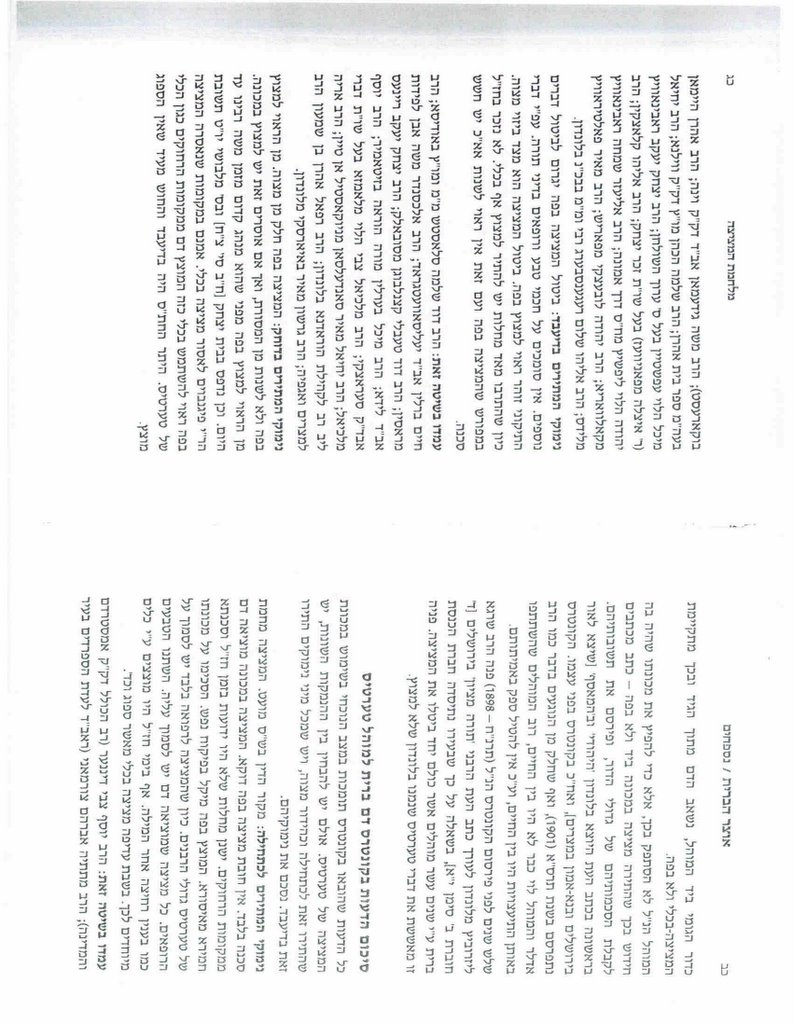
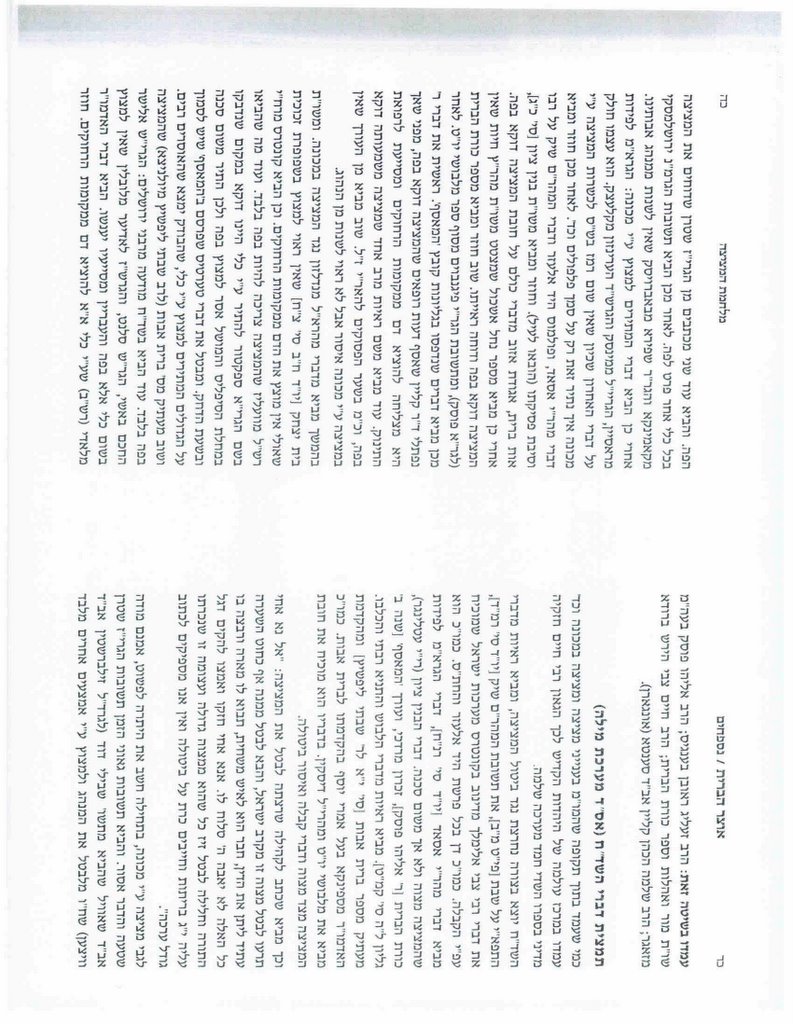
There is an excellent book on circumcision called Otzar Ha-Beris by R. Yosef David Weisberg. In volume 4 of the book, the author has an extensive treatment of the halakhic debate over metzitzah be-feh throughout history. Interestingly, he has a footnote giving credit to historian Jacob Katz for much of the material. It is abundantly clear from the voluminous material that great posekim (halakhic decisors) fall on both sides of this issue. There are posekim who say that metzitzah be-feh is absolutely required and posekim of equal stature who say that it is not. I could not scan the entire section in but here are four pages (click to enlarge).


I have in my possession a forthcoming article in the Journal of Halacha and Contemporary Society on this subject. While I have not yet found the time to read it, I spoke briefly with the author today and he basically comes to the same conclusion -- really the only conclusion: there are great posekim on both sides.

II. Rav Herzog

Let me just add one more voice to the discussion that I have not yet seen quoted in this context, although I might have missed it. The following is R. Yitzhak Herzog's position, as described by R. Itamar Warhaftig in the Orthodox Forum book Engaging Modernity: Rabbinic Leaders and the Challenge of the Twentieth Century, pp. 315-316:
Rav Herzog received a pamphlet from an expert who was religious and decided, "Since the medical experts have found great danger to the child from the mohel," the drawing of blood must be performed by a cloth attached to a glass instrument and one who "insists upon performing it orally is making a grave error in a matter of life and death.... In the past, they performed it orally and were Divinely protected (based upon the verse shomer p'tayim hashem). However, once the knowledge has been established, it is forbidden to stubbornly insist [that the tradition be maintained]" (Yoreh De'ah, chap. 84).
III. AOJS Conference

Some notes from the symposium at the AOJS conference. Keep in mind that I'm not a doctor and did not attend each presentation. I'm only relaying some highlights from selected presentations. The entire symposium was recorded and will be made available to the public.

1. Dr. Robert Schulman clarified exactly how a mohel was reported to the health department, and it was done by the head of Pediatric Infectious Diseases at Columbia Hospital. In other words, and Dr. Schulman did not say this explicitly but I understood as much, it was not R. Moshe Tendler who did the reporting to the health department.

2. Newspapers in favor of metzitzah be-feh quote a famous pediatric urologist who says that he never saw a case of herpes. Dr. Schulman said that this is meaningless because such cases would be taken to a pediatrician or an infectious disease specialist, not a urologist.

3. Dr. Jacob Fleischman gave the presentation about the medical aspects of the issue. He pointed out that the "gold standard" of identifying the source of the herpes -- isolating the virus in the infant and the mohel was never done, so there is no absolute proof to the highest standard. He did not say why it was never done, but I didn't stay around for the question period at the end so maybe he explained it then.

4. Dr. Fleischman said that there were major problems with the medical paper in which R. Moshe Tendler participated. However, the paper dealt with 8 cases in Israel, implying that the problem is very rare and unlikely. A recent study in Israel found 2 wound infections from circumcision out of a sample of over 19,000 circumcised babies, not all of whom had metzitzah be-feh. None of those wound infections were herpes. With some basic statistics -- emphatically tentative -- he compared the probability of transmitting herpes via metzitzah be-feh with that of being struck by lightning or dying in the bathtub (in other words, that the probability of a baby contracting herpes from a mohel is in the same ballpark as the probability of a person being struck by lightning or dying in a bathtub).

5. Dr. Fleischman concluded that the "gold standard" of proof was not available but that the clinical evidence strongly implies that herpes is transmitted through metzitzah be-feh, albeit very rarely.

6. Afterwards, I overheard a famous pediatrician complaining about Dr. Fleischman's presentation. This doctor thought Dr. Fleischman should have been more emphatic about the clinical evidence. You need three things to transmit herpes: a wet surface (mouth or genitalia), direct contact, and an incubation period (of which the vast majority is around 8 days). In the reported cases, the mohel was the only one who fulfilled all of those criteria.

7. R. Yisroel Reisman said something puzzling. He stated that the Jewish people -- Knesses Yisrael (what Solomon Schechter inelegantly termed Catholic Israel) -- had ruled that metzitzah be-feh is required. I found this startling when he said it, but his later remarks indicated that he only meant that certain elements of the Jewish people have accepted this ruling as absolutely binding while other communities did not. But if that's what he meant, his terminology seemed out of place. So I don't quite know what he meant.

8. R. Reisman further emphasized that the current debate should not be about whether metzitzah be-feh is required or not, but whether the government should be intervening in this matter. He said that we are currently losing the public relations battle over it. I was thinking that if the various rabbinic organizations would do something to indicate that they cared about the matter, some sort of self-regulation of mohalim, then maybe that battle could be won.


Saturday, February 18, 2006

Reader Demographics

Dovbear points to another newspaper article about blogs that ignores the Orthodox blogosphere (link).

This article has an interesting quote from Steve Weiss:
"Among young, highly-affiliated Jews, J-blogs are very popular," the 24 year- old New Yorker continues. "As you move up the age brackets, the popularity drops off somewhat, though many in the organizational and rabbinic establishment have started paying a lot of attention to them."
My impression is that a large portion of this blog's readers are over the age of 40. Can anyone confirm?


Friday, February 17, 2006

Aggressive Recruiting at YU

Aggressive recruiting to fulfill stretch growth goals at Yeshiva University's undergraduate schools (link).


Looking for a Student

Any YC or Stern student who wants to make a few bucks for a little work (an hour or two) during the Seforim Sale, please e-mail me.

Thanks

UPDATE: Position filled. Thank you all!


Seforim Sale: Bnei Banim

Last night, more copies of Bnei Banim volume 1-3 were brought to the SOY Seforim Sale. A number of people have contacted me trying to order them. You can either get them at the Seforim Sale or ask for them at your local bookstore. If you aren't sure which store to call, you can try Beigeleisen in Boro Park: (718) 436-1165. Even if they don't have it in stock, they can order it for you.

As before, volume 4 is still available widely in stores and online.


Thursday, February 16, 2006

Seforim Sale: Moral Issues

I'm at the YU Seforim Sale right now and they are selling Moral Issues of the Marketplace in Jewish Law for $22.27, rather than the retail price of $34.95! You will never find this for a cheaper price anywhere.

Disclosure: I publish the book. (Happy?)


R. Gerald Blidstein Wins Israel Prize

From the Jerusalem Post:
Prof. Ya'acov (Gerald) Blidstein of Ben-Gurion University of the Negev has been awarded this year's Israel Prize in Jewish Thought for the year 5766. The prize, Israel's highest honor, was announced by Minister of Education, Culture and Sport Meir Shitreet on Tuesday.


Faith Through Experience and More

This essay by R. Ronnie Ziegler says it all:
  • Faith by experience
  • An alternative to biblical criticism
  • The definition of apologetics
  • Concern for the soul over the mind
Interestingly, the article quotes R. Moshe Sokol and R. Shalom Carmy, both of whom spoke at Aishdas' recent melaveh malkah. There was even a brief moment when R. Sokol said that R. Soloveitchik was not interested in biblical criticism and did not follow the literature, and R. Shalom Carmy contradicted this from his own experience with R. Soloveitchik.


Torino

On the last day of the RCA convention last May, I had the pleasure of eating lunch with the rabbi of Basel, Switzerland (whom I have known for a number of years) and the rabbi of Torino, Italy (whom I then met for the first time). I mentioned to the rabbi of Torino (sorry, I don't remember his name) how his city has such an impressive history of great Torah scholars -- the Rid (R. Yishayahu of Trani), the Riaz (R. Yishayahu of Trani II, the former's grandson), and the Mabit (R. Moshe di Trani). He gently corrected me: Torino is Turin, not Trani. Trani is another city in Italy, much more famous and with a long Jewish history. Well, not more famous anymore.

He mentioned that the city imports a specific cow from South America to make a special mozzarella from its milk that is only available in Torino. He is in charge of ensuring the cheese's kosher status. Personally, I doubt that I would know the difference between one mozzarella and another, but this cheese is very much in demand among his congregants. Which brings me to the next part of this relatively pointless post. At the aforementioned lunch, I was eating some sort of mixed salad with fancy dressing and commented how amazing the lunch tasted. The rabbis of Basel and Torino shook their heads in unison and remarked jokingly about the bland American palate. Not that they didn't like the lunch; it just evidently wasn't "amazing" to people from countries where the hamburger is not the national food.


Wednesday, February 15, 2006

The Brotherhood of Seekers

There is a certain common bond between a specific type of religious person, regardless of religious beliefs and practices. The serious seeker of God shares something with other serious seekers because they are all trying to head in the same direction, even if they firmly believe others have made a wrong turn. I often think that I have more in common with certain serious Catholics than with some of my fellow co-religionists.

R. Baruch Simon, in his recently published Imrei Barukh on Shemos, makes this point in answering the question why the Torah needed to tell us that Yisro (Jethro) was a "priest of Midian." What literary point is made by this added description? R. Simon quotes R. Simcha Zissel Broide, in the latter's Sam Derekh, as explaining that Yisro was searching for God and his elevation to the status of "priest of Midian" was an example of this, as was his subsequent abandonment of this false religion when he learned of God's miracles for the Children of Israel. The description "priest of Midian" was thus a praise of Yisro. He was an honest seeker, and for that he deserves our respect.


Tuesday, February 14, 2006

Mysterious Creatures

If you are interested in buying a copy of Mysterious Creatures, get them quickly at the Seforim Sale. After those are sold, the book will be officially out of print.


Rambam and Allegorical Interpretation of the Torah

Charles Manekin, On Maimonides, pp. 68-69:
We saw above that Maimonides believes in miracles because of scriptural passages that resist metaphorical explanation. But if such passages could be explained convincingly as metaphors, then he would be inclined to do so. This emerges from the following passage in the Essay on Resurrection, which captures both his acceptance and devaluation of miracles in a nutshell:
...I try to reconcile the Law and reason, and wherever possible consider all things as of the natural order. Only when something is explicitly identified as a miracle, and reinterpretation of it cannot be accommodated, only then I feel forced to grant that this is a miracle (Resurrection, p. 223).
Note that this is a weaker criterion for figurative interpretation of scripture than offered before in the case of the creation narrative. There the presumption was to accept the literal meaning of scripture unless it conflicted with demonstrated truth, or unless an alternative interpretation would destroy a foundation of the Law, or conflict with prophetic claims. Here, by contrast, Maimonides' inclination is to provide a natural explanation of a scriptural miracle report unless he is "forced" to grant that it is a miracle, although there are times when he is uncertain whether scripture reports a genuine miracle or not.


Monday, February 13, 2006

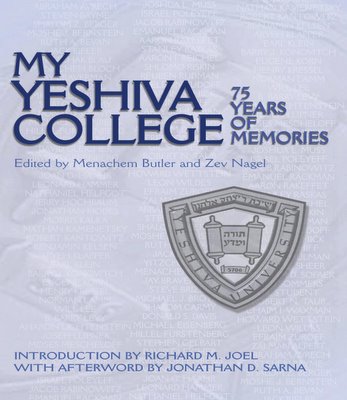
My Yeshiva College

Now available: My Yeshiva College: 75 Years of Memories

Currently for sale at the SOY Seforim Sale.


Sunday, February 12, 2006

Early Twentieth Century Kiruv

Contrary to popular belief, Orthodox outreach in the US did not begin in the 1950s or 60s. From Jeffrey S. Gurock, American Jewish Orthodoxy in Historical Perspective, p. 305:
In 1901, the Jewish Endeavor Society, founded by the early students and first rabbis produced by the pre-Solomon Schechter Jewish Theological Seminary, set up shop on the Lower East Side, in Harlem and in Philadelphia "to recall indifferent Jewry [those disaffected from the landsmanshaft synagogue] back to their ancestral faith." Some 10 years later, the Young Israel movement was inaugurated "to bring about a revival of Judaism among the thousands of young Jews and Jewesses whose Judaism is at present dormant." And in 1917-1918, the Institutional Syngogue and The Jewish Center Synagogue were established in Harlem and New York's West Side, respectively, to serve the acculturated resident one-step removed from the ghetto. Their New York-based institutions inspired comparable synagogue life-styles in cities and communities nationwide.


Yashar Books at SOY Seforim Sale

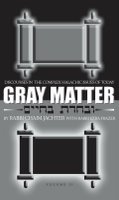
Books available from Yashar at the SOY Seforim Sale:

1. Where There's Life, There's Life by Rabbi David M. Feldman


2. Gray Matter volume 2 by Rabbi Chaim Jachter


3. Moral Issues of the Marketplace in Jewish Law by Rabbi Aaron Levine


4. The Right and the Good: Halakhah and Human Relations by Rabbi Daniel Z. Feldman


5. Medicine and Jewish Law volume III edited by Drs. Fred Rosner and Robert Schulman


6. The Students' Guide Through The Talmud by Rabbi Zevi Hirsch Chajes


7. Rabbi Israel Salanter: Religious-Ethical Thinker by Menahem G. Glenn


8. Bnei Banim volume 4 by Rabbi Yehuda Henkin


9. Mysterious Creatures by Rabbi Nosson Slifkin


Thursday, February 09, 2006

Masorah

The complete archives of the OU journal Masorah is now available online!!!

http://oukosher.org/index.php/kosher/mesorah/

Note how I spelled the journal's name Masorah. I seem to recall R. Mayer Twersky, Rav Soloveitchik's grandson, always being very careful to say "masorah" with his distinctive Boston accent.

I remember a guy in yeshiva, one of R. Hershel Schachter's top students, who, whenever an issue of Masorah (in the early days of the journal) would be published, would go to R. Schachter and ask him which of the anonymous articles he had written and mark them off.


JIB Awards III

And the JIB award goes to...
Best Jewish Religion Blog: Hirhurim (first place)

Best Overall Blog: Hirhurim (third place)

Best Series: Hirhurim (third place)
I'd like to thank everyone who took the time to vote for this blog, Aussie Dave and the Jerusalem Post for hosting the awards, my parents for providing me such a wonderful education and example, my wife for putting up with me, my children's schools for not expelling them based on my writings, the good Lord for providing me with the strength and the ability to write this blog, all the wonderful commenters and e-mailers who keep this blog a discussion rather than a monologue (and properly spelled, more or less), my fellow bloggers who keep me on my toes, and, of course, the academy and the foreign press.

(And thanks to Jason Maoz of The Jewish Press for including Hirhurim in his current list of web favorites)


Wednesday, February 08, 2006

Human Dignity

R. Aharon Lichtenstein writes about the halakhic application of the concept of human dignity as follows (link - RTF):
Several decades ago, I wrote (though have yet to publish) of the sparse practical use of this principle by halakhic scholars. I speculated then that this in large measure results from the fact that we deal here with a very broad "mattir," and consequently, it carries the danger that those searching for "wholesale" halakhic loopholes will utilize this principle to allow whatever they so desire. "So-and-so will be insulted, this one will be hurt, and so kevod ha-beriyot overrides it." As a result, contemporary halakhic authorities shy away from applying this principle.

Contemporary poskim find themselves in glass houses, and this gives rise to their caution (at times subconscious) in applying this principle, out of the concern that their conclusions will be abused for needs other than those intended. They therefore ensure not to open new channels of "heter" (halakhic permission) that could be understood as granting wholesale license to do away with halakhic prohibitions. This yields the conservative and frugal approach with which the concept of kevod ha-beriyot is applied in halakhic decision-making. So strong is this concern that in modern-day responsa literature one hardly finds an instance in which a prohibition - even a rabbinic one - is overridden by kevod ha-beriyot.
Proof of the need for concern: see here and here.


"For Everything Is In It"

Mishnah Avos 5:24 (or 25):
Ben Bag-Bag says: Turn it and turn it, for everything is in it.
This is clearly about Torah and the implications seem to be two-fold. First, one need study only Torah to learn about the world. And second, the Torah cannot be incorrect about anything including scientific matters.

However, in truth, these inference do not necessarily follow from the above Mishnah. There are, of course, different ways to interpret the Mishnah. Below is first a summary of the various interpretations of this Mishnah found in the classic sixteenth century anthology of commentaries to Avos, Midrash Shmuel. Following that, I'll briefly explain what I believe to be the Rambam's approach to this matter.

I. Interpretations

1. Everything in the world has a part of God in it but the Torah has all of God in it. Therefore, it is endless. (In other words, this Mishnah is not referring to science at all but to metaphysical properties.)

2. All rewards--in this world and the next--can be obtained through the Torah. (Again, nothing about science.)

3. All views on every Torah matter are contained within the Torah, so keep studying until you find more opinions.

4. (On the repetition of "turn it":) One cannot understand Torah until one first raises problems with it and then resolves them. (A midrashic explanation of the word hapokh, reading it as "reverse" rather than "turn".)

5. All answers about the Torah are in it so if someone asks you a question about a Torah matter that you cannot answer, keep looking in many different books until you find a good answer. (Again, nothing about science.)

II. Rambam

The Rambam was firmly of the view that Torah -- actual Torah, that is, and not necessarily every view of every sage -- is absolutely true and corresponds entirely with true philosophy/science. If, therefore, philosophy/science teaches a truth, it must correspond to Torah when understood properly. The key, in such a situation, is to understand the Torah properly. The following is from Charles H. Manekin, On Maimonides, pp. 14-15:
Maimonides would agree that the verse does not mean anything philosophical on a plain reading, but on a deeper level, it does. That is because he believes the Torah to be the repository of all wisdom; indeed, that encoded within it are the secrets of existence and of all sciences. These secrets were known to Moses who passed on the explanation orally to his successor, and thus for generations, until they were lost and forgotten among the Jews because of their wanderings and vicissitudes, and their secret nature...

The task of the exegete schooled in the true science of the Law is to reconstruct scripture's philosophical/scientific meaning. Since Maimonides believes that philosophy provides access to many of the truths of existence, the philosopher can discover those truths independently of scripture, and then reveal them within scripture...

Although Maimonides does not hesitate to interpret scripture and midrash philosophically, it is wrong to see the hermeneutical process as a one-way enterprise in which Maimonides reads into the text whatever philosophy teaches. Scripture guides the philosopher to find the truth where philosophy and science may be unable to do so.


No Vasikin Minyan Near Me

There is no vasikin minyan in my neighborhood because I do not live near a nursing home. However, there is a relatively new ke-vasikin minyan in Kollel Bnei Torah on Nostrand Ave. between M & N. Berakhos this week at 6:25 am. You won't necessarily see me there, but this is my doing my part to publicize the minyan.

(Sorry, this gets lost in translation so there's no point in translating it)


Tuesday, February 07, 2006

Parashas Ha-Man

I've gotten a few reminders that today is the day of the year (the Tuesday of the week of the Torah portion Beshalah) to recite Parashas Ha-Man, the Torah passage about the manna, in order receive a segulah (hard to translate) for a livelihood.

Anyone know the source of such a practice? If you answer Reb Mendel of Riminov, I will only ask what his source was.


Riddle

From a reader:
With what fruit did the Jewish people confuse God in parashat Be-shalach? I will mail this fruit to anyone who gets the correct answer.


This Is My God

R. David Silverberg's discussion of the concept in this week's Torah portion of beautifying articles for commandments (I, II) reminded me of my oral entrance examination to Yeshiva University, some 15+ years ago. In my (co-ed) high school, we were learning the third chapter of the Talmudic tractate Sukkah. I was coached by one of my teachers to refer to the chapter by its name, "lulav ha-gazul," and not its number.

So I showed up at the Yeshiva College admissions office and had a nice chat with the admissions officer who, after looking at my transcript, said I'd have no problem getting in and then discovered that we had both lived at one time in the same town in upstate New York. Easy enough. Then I went for my Talmud examination with the "examiner" (bohen), R. Feivel Paretsky. Nothing could have prepared me for that. Here was this elderly rabbi who opened with a joke and kept telling me how impressed he was with the boys from my (co-ed!) high school. I was expecting some ultra-serious rabbi who looked down on me. Nothing could be farther from what I experienced. I later got to know Rabbi Paretsky a little better and discovered that he had learned under leading rabbis of Eastern Europe (the Marheshes and the Hafetz Hayim). But he still managed to connect with me, not to mention the "yellers" (his name from the high school students in the room next to his office) who joined me in college the next year. He asked me what I was learning and I dutifully answered "lulav ha-gazul." So he opened up to the first page of the chapter and had me read the top Tosafos.

The Mishnah states that a dry lulav (palm branch) is invalid for use on Sukkos. Why? Rashi explains that the requirement is from a verse in this week's Torah portion: "This is my God and I will glorify Him" (Ex. 15:2). This verse implies that commandments should be performed in the most pleasant way possible, thereby invalidating an unpleasant, dry lulav.

Tosafos counter that this could not be the source for the invalidation of a dry lulav because the requirement of beautifying a mitzvah is only ab initio (le-khat'hilah). However, if a mitzvah is performed in an unpleasant manner it is still, ex post facto, valid. As proof, Tosafos cite an earlier passage (11b) that it is a mitzvah to bind together all of the four species because of "This is my God and I will glorify Him" but, if one fails to, it is still valid. Therefore, Tosafos suggest that the source for the need to beautify the lulav is a comparison with the esrog, about which the verse explicitly requires a beautiful fruit.

That's all I explained. Then Rav Paretsky asked me how to answer Tosafos' question. I responded that I don't know, what does he think. He then suggested that there are two levels of beautification, one of basic presentability and another of additional beautification. A dry lulav is so unpleasant that it does not even satisfy the basic requirements of presentability, which is why it is invalid. An unbound collection of four species is certainly presentable but lacks an additional beautification, which is why it is still valid. He told me that the Meiri offers this explanation.

And that was it. He gave me a scrap of paper with something scribbled on it that, I later found out, said that I should be put in the top first-year Gemara class. I'm still baffled by that placement and ended up spending the next year trying to catch up with my peers and figure out what was going on in the class.

It was two or three years later that I walked into the main beis midrash one morning and saw a sign announcing the passing of R. Shraga Feivel Paretsky. This was my first brush with death in yeshiva and I assumed that it must be someone else who had passed away and not the vibrant R. Paretsky we all knew and loved. I went straight to R. Baruch Simon and asked him whether it was our R. Paretsky who had passed away. It was. The subsequent funeral was the first of many for older Roshei Yeshiva in which I took part, all with R. George Finkelstein's (the principal of MTA at the time) moving rendition of the Kel Malei Rahamim prayer, which I can still hear echoing in my head.


Monday, February 06, 2006

Metzitzah VIII

I've been planning another post about metzitzah be-feh but I can't seem to find the time for it. In the meantime, see Dr. Eddie Reichman's short but interesting article about possible historical evidence for the transmission of herpes through metzitzah be-feh (link - PDF).


From Questions You Don't Die

Interesting 30-year old interview with Professor Zev Lev about Torah and science (link).


Sunday, February 05, 2006

The Dual Role of Rabbi Zvi Hirsch Chajes: Traditionalist and Maskil

Get your copy of Rebbetzin Bruriah Hutner David's doctoral dissertation, titled The Dual Role of Rabbi Zvi Hirsch Chajes: Traditionalist and Maskil, here (PDF).

Disclaimer to all copyright lawyers: I'm just giving the link. I didn't put it up there.


Jews vs. Jews on Christians

The February issue of First Things has an essay by David Klinghoffer titled "Jews vs. Christians" in which Klinghoffer launches an attack on Union for Reform Judaism president Eric Yoffie and Anti-Defamation League national director Abraham Foxman. Klinghoffer poses six questions about these gentlemen's recent public positions. While I sympathize more with Klinghoffer's politics, I find his attack so off-base that I feel the need to respond on behalf of the subjects of his harsh criticisms.

1. At a time when radical Muslims threaten Jews and others around the world, why vilify American Christians?

First, Klinghoffer makes the mistake of attributing an attack on all Christians to his subjects. This is not true. The attack was on political conservatives, a group that includes many Christians but certainly not all. Second, Klinghoffer seems to be under the impression that people are so limited that they can only comment on one issue. Why, if he can write on a number of different issues in the same week, does he not extend the same ability to his subjects? Yes, time and resources are limited. But that does not mean that we can only be concerned with one perceived danger at a time to the neglect of all others.

2. If conservative Christians were less politically powerful, would this help or hurt the security of the state of Israel?

This is a very astute and important question. However, Klinghoffer's subjects might respond that they are concerned with longer-term security and not just today's danger. What will the world look like in fifty to one hundred years and how will that impact the state of Israel? The answer to that question might be very different than the answer to Klinghoffer's.

3. Practically, what positive ends could anti-Christian attacks possibly accomplish?

Again, Klinghoffer makes the mistake of attributing an anti-Christian attack to his subjects. I am willing to wager that millions of Christians would nod in agreement with the statements of Klinghoffer's subjects. The subjects' goal, presumably, was to raise awareness of the issues and give impetus to organized opposition.

Klinghoffer also raises the issue of opposition to Mel Gibson's movie The Passion and states that "the anti-Semitism the ADL warned the movie would spur never even began to materialize." Here, Klinghoffer is being overly simplistic. No one expected anti-Jewish riots to erupt after showings of the movie. The fear was and is that the movie will serve to educate millions of people in negative stereotypes and theological positions that will eventually encourage and intensify anti-Semitic feelings. It is currently way too early to evaluate whether the movie is, in fact, increasing anti-Semitism.

4. When is the last time anyone tried to Christianize you?

I must assume here that Klinghoffer lives in a different world than I do. I live in an enclave of Orthodox Jews in Brooklyn and work near the diamond district in Manhattan. I estimate that over the past decade I have been approached by missionaries an average of 5 times a year, despite (or perhaps because) I am very obviously an Orthodox Jew. Missionaries come knocking on my door, approach me on the subways, and occasionally accost me in the streets of Manhattan. Just last summer I had to extricate an Orthodox mother of six down the block from a conversation with very persistent missionaries that she could not seem to end. I envy Klinghoffer's world in which Jews are free from pestering missionaries.

5. How do you explain the fact that "bigoted" Christian political positions mirror the traditional views of Judaism?

I am surprised by this because it is not at all clear to me that the traditional views of Judaism are consistent with conservative Christian political positions. Certainly on issues such as abortion, stem-cell research, euthanasia, and cloning our positions differ. Rabbi David M. Feldman, the man who literally wrote the book on the traditional Jewish position on abortion, argues that point at great length in his new book Where There's Life, There's Life. There is a strong case made by (Orthodox) Rabbi Michael J. Broyde for gay rights as well, and Marc D. Stern has recently made another strong case in the pages of the Rabbinical Council of America's journal Tradition. Klinghoffer would do well not to speak in the sole name of traditional Judaism.

6. What of the economics behind these anti-Christian attacks?

Klinghoffer is correct that salaries to Jewish communal figures are sometimes outrageous and that issue needs to be dealt with. Personally, I lose faith in (and refuse to contribute to) charitable organizations that compensate its professionals so lavishly, and choose instead to direct my charity dollars to more fiscally responsible organizations. However, I suspect that Klinghoffer is overly cynical. Anti-Semitism is still very much in existence and the Anti-Defamation League, for example, serves an important function in our community. This is regardless of its director's public statements and, even without such a person at the helm, the organization would still need to exist and be properly funded.

Klinghoffer concludes by stating that his "are fair questions." I disagree. They are loaded in terminology and incorrect in fact.


Thursday, February 02, 2006

The Plague of Darkness

1. See this post about whether the darkness in general is a substance, rather than an absence of light, or just the darkness for this plague was a new creation .

2. Rashi on Ex. 10:22 asks:
Why did He bring darkness on them? Because there were among the Israelites of that generation evil people who did not wish to leave, and they died out during the three days of darkness so that the Egyptians not see their demise...
R. Ya'akov Kamenetsky pointed out that just about all the Jews at that time were sinners, even idolaters. So why did only some of the die during the plague of darkness? I think a careful reading of Rashi tells us the answer: "evil people who did not wish to leave"

Yes, there were plenty of wicked people who committed the most terrible sins. But sins didn't prevent Jews from leaving Egypt and being brought to Israel. It was those who refused to leave, who for some reason did not want to leave Egypt or thought for some theological reason that they shouldn't leave, who deserved to die in this plague.


Opponents to Evolution and Christian Influence

R. Joseph B. Soloveitchik, The Emergence of Ethical Man, p. 6:
Our task now is to investigate the cogency of the almost dogmatic assertion that the Bible proclaimed the separateness of man from nature and his otherness.

It is certain that the fathers of the Church and also the Jewish medieval scholars believed that the Bible preached this doctrine. Medieval and even modern Jewish moralists have almost canonized this viewpoint and attributed to it apodictic validity. Yet the consensus of many, however great and distinguished, does not prove the truth or falseness of a particular belief. I have always felt that due to some erroneous conception, we have actually misunderstood the Judaic anthropology and read into the Biblical texts ideas which stem from an alien source. This feeling becomes more pronounced when we try to read the Bible not as an isolated literary text but as a manifestation of a grand tradition rooted in the very essence of our God-consciousness that transcends the bounds of the standardized and fixed text and fans out into every aspect of our existential experience. The sooner Biblical texts are placed in their proper setting - namely, the Oral Tradition with its almost endless religious awareness - the clearer and more certain I am that Judaism does not accent unreservedly the theory of man's isolationism and separatism within the natural order of things.
Before someone suggests that the Oral Tradition takes the Creation story literally, keep in mind that R. Soloveitchik was very cognizant of Rambam's tripartite division of those who study aggadah and would certainly not be among those who take every midrash at its simple face value.


Wednesday, February 01, 2006

Rashi's Daughter and Tefillin

Did Rashi's daughter wear tefillin? According to Prof. Aryeh Frimer, for 35 years he has been searching for evidence to support that rumor and has yet to find it.


Awakening to a New Day

R. Ya'akov Nagan (AKA Jack Genack) has a blog in Hebrew named Awakening to a New Day: The Jewish Spiritual Search from East to West. I always expected him to go the way of academic Talmud study but according to his bio he is "an instructor in the Hesder Yeshiva in Otniel, has a doctorate in Jewish Thought from Hebrew University and is involved in spiritual search, kabbalah and the relationship between Judaism and eastern religions."


R. Hershel Schachter on Carmine

Obtained from the OU and printed with permission (what other religion blog provides full responsa?). I don't have time to translate right now but if no reader takes it upon himself I'll try to do it tonight.
This teshuva is reprinted from
The Daf HaKashrus Volume 1 Issue #4

שאלה: במפעל נכרי לייצור מיץ-פירות, העומד תחת השגחתנו על ידי משגיח היוצא ונכנס מפעם לפעם, הכניסו בטעות קארמיי"ן אל תוך המיץ בכדי ליפות את מראה הצבע, אך לא בשביל הטעם, ויש כנגדו הרבה יותר מששים, אלא שצבעו ניכר במיץ, וכבר שלחו חצי הבקבוקים אל החנויות למכור, וחציים עדיין עומדים במפעל, האם יש כאן מקום להקל בדיעבד?

Read moreתשובה: הנה באיסור שנתערב בהיתר באופן שאינו נותן בו טעם, אלא שגרם לשנות את צבע כל התערובת, בדבר זה נחלקו הפוסקים. המחבר והרמ"א (באו"ח סי' תקי"ג ס"ג, וביו"ד ריש ס' ק"ב) רק החמירו בזה בדבר שיש לו מתירים, כמוקצה ביו"ט ולא בשאר איסורים. ועיין שם בדרכי תשובה סק"ל, שבספר מנחת כהן החמיר לדון כה"ג כניכר האיסור. והפרי חדש הכריע לחלק בין איסורים דאורייתא דאמרינן בהו דחזותא מילתא ולא מתבטל, מה שאין כן באיסור דרבנן, וכן כתב החת"ס שאין לזוז מפסק הפר"ח בזה. (עי' מה שכתבתי בזה במסורה, חוברת א', עמוד נט).

ומעתה עלינו לברר גדר איסור הקארמיי"ן, אם הוא דאוריתא, דרבנן, או רק בתורת חומרא. והנה ענין הקארמיי"ן הוא שלוקחים זבובים מיוחדים, ומייבשים אותם היטב וטוחנים אותם הדק היטב עד שנהפך להיות כקמח, ומערבים מעט מהפאודע"ר הזה אל תוך מיץ הפירות לשם חזותא. והזבובים האלה כל כך קטנטנים המה, שיש מהם שבעים אלף בפאונ"ד אחד. ועי' בתשובות קנין תורה (יו"ד ח"א סי' קי"ד) ובמנחת יצחק (ח"ג סי' צ"ו) שהביאו מהגמ' בחולין (נח.) כל בריה שאין בו עצם, אינו מתקיים י"ב חודש....שמע מינה....קישות שהתליע...אסורה....לבתר תריסר ירחי שתא שריין. וכן הובא להלכה בשו"ע יו"ד (סי' פ"ד ס"ח). ועיי"ש בדרכי תשובה ס"ק ק"ז שהביא מהאחרונים, דאע"ג דשרץ שמת עדיין אסור, מכל מקום, לאחר י"ב חודש נעשה כעפרא בעלמא ומותר. ויש לבאר היתר זה באחד משני אופנים, או משום שנשתנה האיסור, או מפני שנפסל מאכילה, ונבילה שאינה ראויה לגר לאו שמה נבילה (גמ' ע"ז סח.).

והנה בנוגע לאיסור שנשתנה יש בזה מחלוקת גדולה ודיון רחב בפוסקים אם אפשר להקל מטעם זה, והכרעת המשנה ברורה (סי' רט"ז סק"ז) על פי הפרמ"ג שאין להקל בזה באיסורים דאורייתא (עיי"ש במסורה עמוד נ"ד). וממילא כאן באיסור שרץ דאורייתא, אי אפשר לתפוס שסמכו להקל על כך. ואין לנו להקל אלא מכח הטעם השני, שנפסל לגמרי מאכילה, ונבילה סרוחה שאינה ראויה לגר לאו שמה נבילה.

ובפשוטו נראה, דבזבובים אלו שלא היו אף פעם ראויים לאכילת אדם, אין מקום כלל להקל בהם ולומר שלאחר שנתייבשו ונטחנו וכו' שיהיו מותרים מטעם נבילה סרוחה, שהרי לא נשתנה כאן כלל לגריעותא מצבו של המאכל האסור. ובספר קנין תורה כתב דבנדון דידן, שהזבובים פגומים ביותר מן התולעים, אולי יש יותר סברא לצדד להיתר. ובפשוטו נראה דנהפוך הוא, דדוקא במאכל אסור, שהי' מתחילתו ראוי לאכילה, ואחר כך נפסל ונסרח, דוקא שמה שייך להתירו מכח דינא דנבילה שאינה ראויה לגר. אך בשרץ שכזה, שמעולם לא הי' ראוי לאכילה, לא שייך להתירו אחר כך כש"נפסל" מאכילה, שהלא זהו גופא מה שאסרה תורה שרץ זה, למרות מה שאינננו ראוי לאכילה, [עי' מזה בתורת הבית להרשב"א שער התערובת (דף י"ט ע"ב) ובבדק הבית שמה (דף כ' ע"א)) ואדרבא, התהליך של הייבוש והטחינה מקרבו ביותר להיות קצת יותר ראוי לאכילה. (ואפילו בתולעים, שהיו ראויים לאכילה מתחילה, ורק אח"כ נפסלו מכח הייבוש והטחינה שעשו בידי אדם, יש דיעות בפוסקים הסוברים שאין להקל בזה, דדוקא בנבילה שנסרחה מאליה - בידי שמים - הוא דשרי, ודננו בדבריהם במסורה חוברת ה' (עמוד ס"ו)].

ומטעם זה החמרנו לאסור לא רק את הבקבוקים שעדיין היו עומדים במפעל, אלא אף אלו שכבר נשלחו לחנויות הצרכנו שיחזירום, לחוש לחומרת הפר"ח והחת"ס לומר באיסורים דאורייתא דחזותא מילתא.

צבי שכטר
ג' לס' ואתחנן, י"ב אב, תשנ"ב


Rabbi Moshe Dombey z"l

I just found out that Rabbi Moshe Dombey, the kind and generous founder of Targum Press, passed away. In the small world of Jewish publishing, it is hard not to make friends with "competitors." Moshe always had plenty of advice for this newbie and never hesitated to offer his assistance. He will be missed.

May his memory be for a blessing and his family find comfort.

(See some nice comments about him here)


JIB Awards

Rabbi Yaakov Menken over at Cross-Currents is lobbying hard to defeat Hirhurim in the JIB Awards. I kindly remind readers who have not recently voted and want to stymie his efforts, that voting ends tomorrow February 2nd. The two categories under contention are Best Religion Blog and Best Overall Blog.

As Bartles and Jaymes used to say, thank you for your support.


Twitter Delicious Facebook Digg Favorites More